

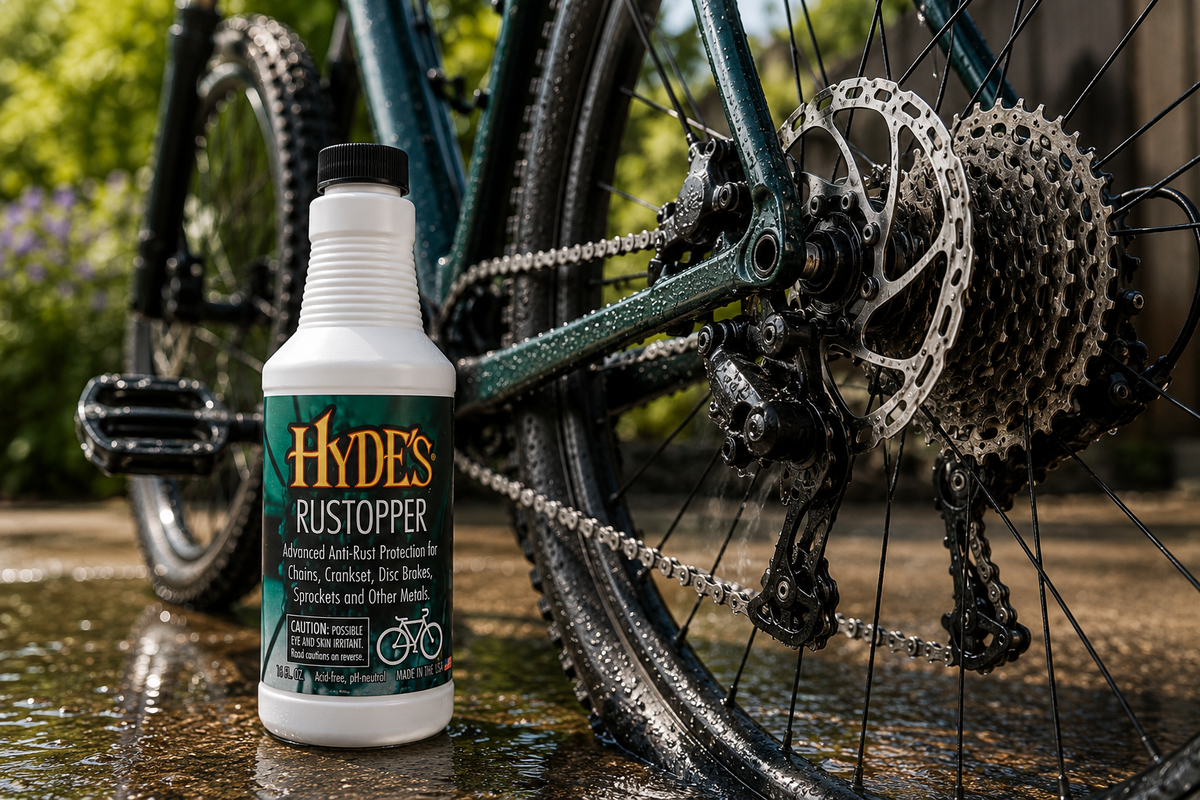
How to Prevent Rust on Bicycle Chains, Disc Brakes and Drivetrains
You wash your bike, rinse away the dirt, and put it away looking clean.
The next day, you notice something you definitely didn't clean onto it.
Rust.
Maybe there's a light orange color on the chain. Maybe the disc brake rotors have developed surface rust. Maybe you're seeing corrosion around the cassette, sprockets, bolts, or other exposed metal components.
It can happen surprisingly fast.
Bicycles are constantly exposed to the things corrosion needs to get started: water, oxygen, dirt, road grime, sweat, humidity, and sometimes salt.
Mountain bikes add mud and stream crossings to the equation. Commuter bikes may sit outside in the rain. Road bikes encounter sweat and road spray. Bikes near the coast deal with salt in the environment. E-bikes often get ridden year-round and can have expensive drivetrains worth protecting.
Even washing your bike can leave exposed metal vulnerable if the job ends with the rinse.
The answer isn't to stop washing your bicycle.
It's to finish the job properly.
A good routine is simple:
Clean. Rinse. Protect. Lubricate.
Here's how.
Why Do Bicycle Chains Rust?
Most bicycle chains contain steel.
Steel gives a bicycle chain the strength needed to transfer power from your pedals to the rear wheel thousands of times during every ride.
But steel containing iron can oxidize when exposed to moisture and oxygen.
Protective coatings, plating, lubricants, and other treatments can improve corrosion resistance, but they don't mean a bicycle chain should be left wet indefinitely.
The problem becomes more likely when you combine moisture with:
- A dirty or poorly lubricated chain
- Repeated wet rides
- Improper storage
- Road salt
- Coastal environments
- High humidity
- Sweat
- Washing without drying and re-lubricating
- Long periods between maintenance
That's why a bike can look perfectly clean after washing and still develop corrosion afterward.
Why Can a Bike Chain Rust After Washing?
This catches a lot of riders by surprise.
You washed the bike because you wanted to take care of it.
So why did the chain rust afterward?
Cleaning removes dirt and contamination, but it can also remove some of the lubrication and protection that was on the chain.
Then you add water.
If the chain stays wet and isn't properly protected and re-lubricated afterward, you've created an opportunity for oxidation.
That's why professional bicycle maintenance guidance doesn't end with "rinse."
After cleaning, the chain needs to be dried and properly lubricated.
Park Tool, for example, recommends drying the chain after cleaning and then re-lubricating it. Proper chain cleaning and lubrication also helps reduce drivetrain wear and keeps the drivetrain functioning properly.
How to Clean and Lubricate a Chain
The lesson is simple:
Washing is only part of bicycle maintenance.
What you do afterward matters too.
If your chain specifically develops orange or brown rust after cleaning, read our detailed guide to why bike chains rust after washing and how to prevent it. It explains why moisture can remain around chain links and rollers, how quickly surface oxidation can develop, and what to do after washing or riding in the rain.
Can Bicycle Disc Brake Rotors Rust?
Depending on their material and construction, bicycle disc brake rotors and other braking components can show surface oxidation after exposure to water.
The situation is similar in principle to what happens with automotive and motorcycle braking systems.
The rotor gets wet.
The bike sits.
Susceptible metal surfaces can begin oxidizing.
You may notice this after:
- Washing the bicycle
- Riding in rain
- Riding through puddles or wet trails
- Storing the bicycle while wet
- Riding near saltwater
- Transporting a bike on an exposed vehicle rack during bad weather
A small amount of surface oxidation is very different from a badly corroded or damaged brake component.
If a rotor has significant corrosion, deep pitting, damage, unusual wear, or braking performance changes, have the bicycle inspected by a qualified bicycle mechanic.
Brakes are safety-critical components.
Don't guess.
Be Extremely Careful Around Disc Brakes
There is one rule worth remembering whenever you're maintaining a disc-brake bicycle:
Don't casually put oils, grease, chain lubricant, or other inappropriate products onto brake friction surfaces.
Disc brakes depend on friction between the brake pads and rotor.
Oil contamination can interfere with that relationship.
This is particularly important when lubricating the chain.
Don't simply spray lubricant across the drivetrain and let overspray travel toward the rear brake rotor.
Controlled application is better.
Apply the appropriate product where it's intended to go.
The same principle applies to corrosion protection. Use only products specifically designed and labeled for the surfaces you're treating, and follow the directions carefully.
Your Chain and Brake Rotors Need Different Things
This distinction is important.
A brake rotor needs predictable friction.
A bicycle chain needs lubrication.
So although both components may benefit from corrosion prevention, their maintenance requirements are not identical.
A corrosion-prevention treatment does not eliminate the need for chain lubricant or wax.
After cleaning and treating a bicycle chain, apply the chain lubricant or wax appropriate for your drivetrain and riding conditions if required.
Park Tool specifically recommends re-lubricating the chain after cleaning and drying it.
Think of the process this way:
Corrosion protection helps address rust.
Chain lubrication helps address friction and wear.
You may need both.
Don't Forget the Cassette and Sprockets
The chain gets most of the attention because it's easy to see and easy to replace.
But the rest of the drivetrain matters too.
Depending on your bicycle, that includes:
- Cassette or freewheel
- Chainrings
- Derailleur pulleys
- Sprockets
- Fasteners
- Other drivetrain hardware
Dirt, old lubricant, water, and road contamination can collect throughout this area.
Regular cleaning doesn't just make the bicycle look better. It gives you an opportunity to inspect components for wear, damage, and developing corrosion.
Park Tool recommends cleaning the chainrings, rear cogs, and derailleur pulleys as part of drivetrain cleaning rather than focusing exclusively on the chain.
That's a good habit.
Mountain Bikes Face a Tough Environment
Mountain bikes are built to get dirty.
Mud.
Streams.
Puddles.
Wet grass.
Rain.
Dust.
Then they get washed.
That's a lot of repeated wet-and-dry cycles for the drivetrain.
The answer isn't avoiding water. A mountain bike needs to be cleaned.
The important part is what happens after the mud is gone.
Rinse away the contamination.
Dry the bike properly.
Protect appropriate exposed metal.
Lubricate the chain according to the manufacturer's requirements.
Then inspect the drivetrain while it's clean enough to actually see.
A clean bike is much easier to inspect than one covered in yesterday's trail.
Road Bikes Have Their Own Corrosion Problem: Sweat
Mountain bikers see mud.
Road cyclists sometimes underestimate something much closer to home.
Sweat.
During a hard ride or indoor training session, perspiration can repeatedly reach parts of the bicycle.
That's particularly relevant to bikes used on indoor trainers, where there's no wind moving across the bicycle and the same areas may be exposed repeatedly.
The visible frame may get wiped down while fasteners and other metal components are ignored.
Don't assume that a bicycle needs to be ridden through rain to encounter moisture and salts.
If you train heavily indoors, include a quick inspection and wipe-down as part of the routine.
Commuter Bikes May Have It Hardest
A commuter bike often doesn't receive the same attention as an expensive weekend road or mountain bike.
Yet it may live a much harder life.
Rain.
Road spray.
Outdoor bike racks.
Winter weather.
Salt-treated roads.
Daily use.
Then it gets parked until tomorrow morning.
If your bicycle is transportation rather than recreation, regular corrosion prevention can be even more important.
A few minutes of maintenance periodically is much easier than dealing with a drivetrain that's been neglected through an entire wet winter.
What About E-Bikes?
E-bikes deserve the same drivetrain attention, sometimes more.
Many e-bikes are heavier than conventional bicycles and may place substantial loads on drivetrain components. They're also frequently used for commuting and year-round transportation.
The basic corrosion principles don't change.
Keep the drivetrain clean.
Manage moisture.
Protect appropriate exposed metal.
Lubricate the chain correctly.
But because you're also dealing with electrical components, batteries, motors, displays, and connectors, follow the bicycle manufacturer's specific cleaning instructions.
Don't assume that because something is water-resistant it should be blasted with high-pressure water.
Park Tool likewise recommends following the drivetrain manufacturer's guidance regarding water exposure on e-bikes.
Avoid High-Pressure Washing
A pressure washer may make a dirty bicycle look like an easy five-minute job.
That doesn't necessarily make it a good idea.
High-pressure water can force contamination and moisture into places where you don't want it.
A controlled rinse is a better approach.
Park Tool recommends using low pressure and a wide spray when washing a bicycle with a hose.
You don't need industrial pressure to remove bicycle dirt.
Use the appropriate cleaner, brushes, and water.
A Better Post-Ride and Post-Wash Routine
The goal isn't to turn every ride into an hour of bicycle maintenance.
Match the routine to the conditions.
A dusty summer road ride doesn't require the same response as a muddy trail ride or a winter commute through road salt.
When a proper wash is needed, here's a sensible sequence.
Step 1: Clean the Drivetrain
Remove built-up dirt, old lubricant, and grime using products appropriate for your drivetrain.
Step 2: Wash the Bicycle
Clean the frame, wheels, and appropriate components.
Avoid unnecessarily aggressive cleaning methods.
Step 3: Rinse Thoroughly
Remove cleaners and loosened contamination.
Use controlled, low-pressure water rather than blasting bearings and other components.
Step 4: Address Exposed Metal
This is where corrosion protection can fit into the routine.
Step 5: Dry the Bicycle
Remove excess water and allow components to dry properly.
Hand drying also gives you a chance to inspect the bike. Park Tool specifically notes this advantage when discussing post-wash drying.
Step 6: Lubricate the Chain
Once appropriate treatments have dried, apply the correct chain lubricant or wax as required.
Don't leave a freshly cleaned drivetrain without the lubrication it needs.
Step 7: Inspect
Look at the chain.
Look at the sprockets.
Check the brake components.
Look for loose hardware, damage, wear, or developing corrosion.
Cleaning makes problems easier to see.
Where Rustopper for Bicycles Fits In
Hyde's Serum developed Rustopper around a simple problem: exposed metal can begin oxidizing surprisingly quickly after water exposure.
That problem isn't limited to cars, motorcycles, or marine equipment.
Bicycles encounter the same basic chemistry.
Rustopper for Bicycles is designed to provide rust and oxidation protection for braking systems, drivetrain components such as chains and sprockets, and appropriate exposed metal surfaces.
It is designed to help:
- Prevent flash rust and oxidation after washing or water exposure
- Reduce rust-related contamination from brake rotors
- Protect appropriate exposed metal surfaces
- Add corrosion protection to bicycle washing and storage routines
Rustopper is acid-free and pH-neutral and is formulated for appropriate metals, chrome, painted surfaces, and braking systems when used according to the product directions.
How to Use Rustopper on a Bicycle
After washing the braking system, drivetrain, or appropriate metal surfaces:
- Rinse thoroughly.
- While the surfaces are still wet, spray Rustopper evenly onto the brake rotors, drivetrain components, and appropriate metal surfaces.
- Allow the treated surfaces to dry completely.
- Wipe away excess where necessary.
- For chains, apply the appropriate lubricant or wax after drying if required.
For best results, apply in the shade on cool surfaces.
Always read and follow the complete directions and precautions printed on the product label.
Rustopper complements proper bicycle maintenance. It does not replace chain lubricant, brake service, component inspection, or manufacturer-recommended maintenance.
How to Prevent a Bicycle From Rusting During Storage
Bikes don't need to be moving to corrode.
A wet bike stored in a humid garage, basement, shed, or outdoor area may sit in those conditions for days or weeks.
Before longer-term storage:
Clean off road grime, mud, salt, and sweat.
Dry the bicycle.
Inspect the drivetrain and exposed hardware.
Protect appropriate metal surfaces.
Lubricate the chain correctly.
Store the bike somewhere reasonably dry whenever possible.
If the bicycle has been ridden on salt-treated winter roads, don't put it away for the season without thoroughly removing those contaminants.
A clean bicycle is a better starting point for storage.
A clean and protected bicycle is better still.
Seven Bicycle Rust Prevention Mistakes
1. Putting the Bike Away Wet
If you've just washed the bicycle or ridden through heavy rain, deal with the moisture rather than forgetting about it.
2. Cleaning the Chain and Forgetting to Re-Lubricate It
A clean chain still requires appropriate lubrication.
3. Spraying Chain Lube Everywhere
Controlled application reduces mess and helps keep lubricant away from braking surfaces.
4. Using a Pressure Washer Carelessly
More pressure doesn't mean better bicycle maintenance.
5. Ignoring Road Salt
Winter commuters should remove salt contamination rather than letting it remain on the bike.
6. Thinking a Garage Automatically Prevents Rust
A damp or humid garage can still provide conditions that encourage corrosion.
7. Waiting Until Rust Appears
Prevention is much easier than trying to deal with established corrosion.
Frequently Asked Questions About Bicycle Rust
Why did my bike chain rust after washing?
Cleaning can remove contamination along with some of the chain's existing lubrication. If a steel chain remains wet and isn't properly dried, protected, and re-lubricated, surface oxidation can develop.
Can a bike chain rust overnight?
Under the right conditions, visible surface oxidation can develop quickly on susceptible steel components.
Can bicycle disc brake rotors rust?
Some rotor materials and other braking components can develop surface oxidation after water exposure. Significant corrosion or changes in braking performance should be evaluated by a bicycle mechanic.
Should I lubricate my bicycle chain after washing?
Generally, a cleaned chain should be dried and properly re-lubricated according to the chain and lubricant manufacturers' recommendations. Park Tool also recommends re-lubricating the chain after cleaning.
Can I use WD-40 as my regular bicycle chain lubricant?
A purpose-made bicycle chain lubricant is the better choice for routine chain lubrication. Park Tool specifically advises against relying on common household penetrating oil as a regular chain lubricant.
Does chain lubricant help prevent rust?
Many bicycle chain lubricants also provide some corrosion protection. The primary point is to use the correct lubricant for the chain and riding conditions and maintain it regularly.
Is it okay to wash my bicycle with a hose?
Yes, but use sensible water pressure. Park Tool recommends low pressure with a wide spray rather than unnecessarily aggressive pressure.
Should I pressure wash my bicycle?
Avoid directing high-pressure water at bearings, seals, electrical components, and other vulnerable areas. Follow your bicycle manufacturer's cleaning recommendations.
Do e-bike chains rust?
E-bike chains are still exposed to water, grime, and environmental conditions. Regular drivetrain cleaning and lubrication remain important.
Can road salt damage a bicycle?
Salt-contaminated winter conditions create a more aggressive environment for metal components, making regular cleaning and corrosion prevention particularly important.
Can I put oil on bicycle disc brake rotors to prevent rust?
No. Don't apply ordinary oils or chain lubricants to disc brake friction surfaces. Braking components require appropriate products and maintenance procedures.
What is Rustopper for Bicycles?
Rustopper is Hyde's Serum's corrosion-protection product designed for bicycle braking systems, drivetrain components, and appropriate exposed metal surfaces.
When should Rustopper be applied?
Apply Rustopper after washing and rinsing while the appropriate surfaces are still wet, following the directions on the product label.
Does Rustopper replace chain lubricant?
No. After the chain has dried, apply the appropriate chain lubricant or wax if required.
Can Rustopper repair an already rusted bicycle chain?
Rustopper is intended to help prevent rust and oxidation. It isn't a repair for a chain or component that has suffered significant corrosion or wear.
Protect the Bike After You Clean It
A clean bicycle is satisfying.
A clean bicycle that stays protected is better.
Whether you ride mountain trails, commute through winter, put thousands of miles on a road bike, or use an e-bike for everyday transportation, water exposure is part of bicycle ownership.
Rust prevention doesn't need to be complicated.
Remove the dirt and contaminants.
Rinse properly.
Protect appropriate exposed metal.
Dry the bicycle.
Lubricate the drivetrain correctly.
Inspect the components while they're clean.
Then go ride.
Clean. Rinse. Protect. Lubricate.
Explore More Rust Prevention Guides
Bicycles are only one part of the corrosion story. Explore Hyde's Serum's other guides for practical rust-prevention advice.
Why Brake Rotors Rust After Washing and How to Prevent It
How to Prevent Rust and Corrosion on Boats and Boat Trailers
How to Prevent Motorcycle Rust After Washing, Rain and Storage

Share:
How to Prevent Motorcycle Rust After Washing, Rain and Storage
How Automotive and Motorcycle Dealerships Can Help Prevent Rust After Washing