

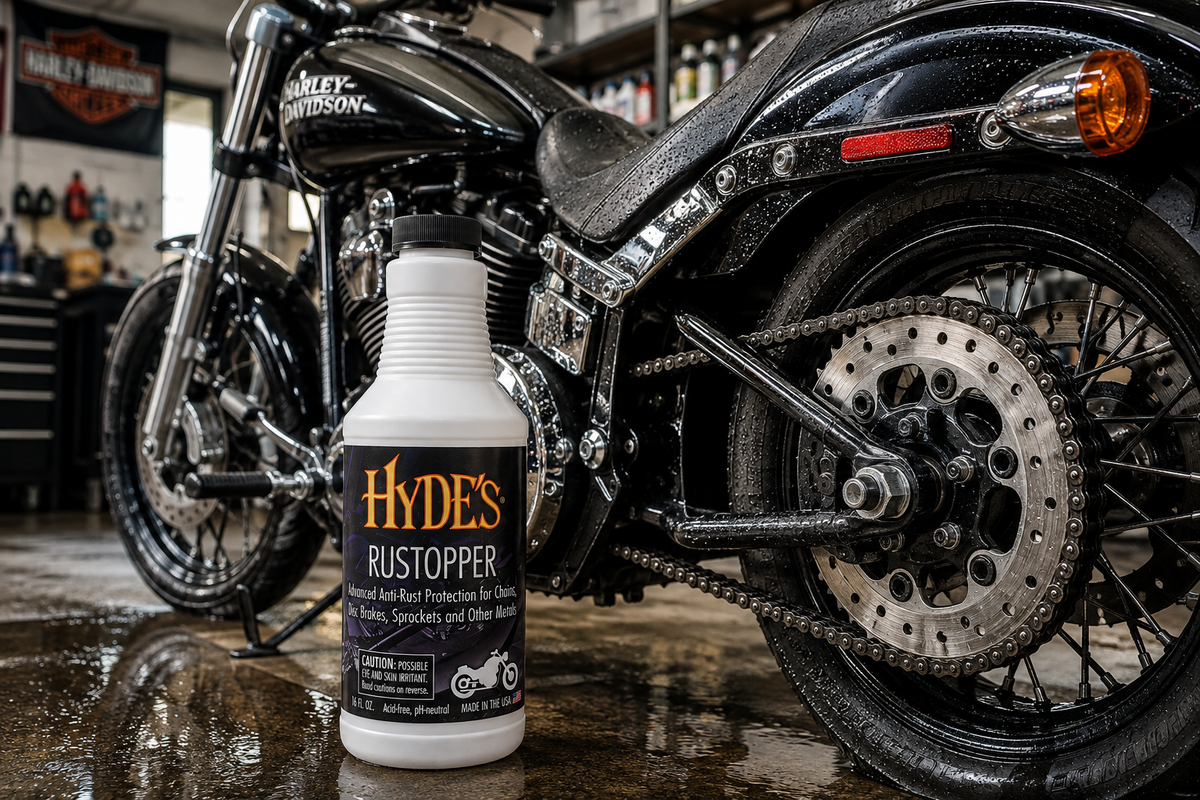
How to Prevent Motorcycle Rust After Washing, Rain and Storage
A clean motorcycle can start showing signs of rust surprisingly fast.
You wash the bike, rinse away the road grime, dry the painted surfaces, and everything looks great. Then you notice a light orange film developing on the brake rotors. Maybe there's discoloration on the chain, a fastener, or another exposed metal surface.
If the motorcycle was ridden in rain, near saltwater, or on winter-treated roads, the problem can become even more noticeable.
Why does this happen so quickly?
Motorcycles combine several things corrosion loves: exposed metal, water, oxygen, road contaminants, and plenty of places where moisture can hide.
Unlike a car, much of a motorcycle's mechanical hardware is completely exposed. Brake rotors, chains, sprockets, fasteners, brackets, and other metal components are right out in the open.
That makes corrosion prevention an important part of motorcycle care, especially after washing, wet rides, winter road exposure, or before storage.
The good news is that protecting a motorcycle doesn't need to become an all-day project.
The right routine comes down to four basic steps:
Clean. Rinse. Protect. Lubricate.
Here's how to do it properly.
Why Do Motorcycles Rust?
Rust is the result of a chemical process.
When iron or steel is exposed to moisture and oxygen, oxidation can occur. The reddish-brown material we recognize as rust is a form of iron oxide.
Motorcycles contain many different metals and protective finishes, so not every component will corrode in the same way.
Painted and coated surfaces have barriers separating the underlying metal from the environment.
Other components are far more exposed.
Depending on the motorcycle, vulnerable areas can include:
- Brake rotors
- Chains
- Sprockets
- Fasteners
- Brackets
- Springs
- Exhaust hardware
- Stands
- Foot controls
- Other exposed steel components
Moisture alone can begin the process.
Add road salt, coastal air, grime, repeated wet-and-dry cycles, or long periods of storage and you create a much more challenging environment.
Why Can a Motorcycle Rust Right After Washing?
This seems backwards.
You wash the motorcycle to take care of it. Why does rust sometimes appear immediately afterward?
Because cleaning and corrosion are two different processes.
Washing removes dirt, road grime, salt, brake dust, and other contaminants. That's good.
But once those contaminants are removed, certain bare metal surfaces are left clean and wet.
Now you have the ingredients oxidation needs:
Metal + moisture + oxygen.
One of the easiest places to see this is on the brake rotors.
A clean rotor can develop a thin orange film relatively quickly after washing. This rapid surface oxidation is commonly referred to as flash rust.
The wash didn't ruin the brake rotor.
You're simply seeing exposed metal react with its environment.
Why Motorcycle Brake Rotors Develop Flash Rust
Brake rotors have an unusual job.
They need to withstand heat, friction, repeated braking cycles, weather, road contamination, and long periods of exposure.
The friction surface also needs to interact directly with the brake pad.
That means you can't treat it like a painted body panel.
After washing or riding through rain, moisture can remain on the rotor. If the material is susceptible to oxidation, a light surface film can develop while the motorcycle sits.
In many cases, normal brake use removes light surface oxidation from the working surface.
That doesn't mean every rusty-looking brake component should automatically be ignored.
Deep pitting, heavy scaling, persistent corrosion, unusual braking behavior, vibration, or other concerns should be inspected by a qualified motorcycle technician.
Brakes are safety-critical components.
Corrosion prevention is maintenance. It isn't brake repair.
The Motorcycle Chain Has a Different Problem
Brake rotors are designed around friction.
Chains are designed around movement.
That means they need a different maintenance approach.
A motorcycle chain consists of numerous moving components and interfaces. Depending on the chain design, it may also incorporate seals and factory-applied internal lubrication.
Water, road grime, salt, and improper cleaning can all create problems.
After washing, leaving a chain wet and unprotected is generally not a good maintenance strategy.
The chain should be maintained according to the motorcycle and chain manufacturers' recommendations, including appropriate lubrication.
This distinction is important:
Corrosion protection and chain lubrication are not the same thing.
A corrosion inhibitor can help address oxidation on appropriate surfaces, but it doesn't eliminate the need for proper chain lubricant or wax where required.
Chain Rust After Washing
One of the most common complaints among riders is discovering orange discoloration on a chain shortly after washing the motorcycle.
Several factors can contribute:
- The chain wasn't dried properly
- Lubrication was removed during cleaning
- The motorcycle was stored while components were still wet
- The bike was exposed to road salt
- The chain already had areas of corrosion
- The wrong cleaning product was used
- Lubrication wasn't reapplied when required
A better routine is to think beyond simply getting the chain clean.
You want it clean, protected, and properly lubricated.
Always follow the chain manufacturer's instructions because maintenance requirements can differ between chain types.
Don't Forget the Sprockets
Chains get most of the attention, but they're only half of the drivetrain relationship.
Inspect the front and rear sprockets as part of your normal maintenance routine.
Look for:
- Corrosion
- Abnormal wear
- Damaged teeth
- Excessive contamination
- Unusual chain wear patterns
A beautifully cleaned chain doesn't compensate for worn drivetrain components.
Regular cleaning gives you an excellent opportunity to actually look at the mechanical parts of the motorcycle rather than waiting for a problem to announce itself.
Rain Can Be Harder on a Motorcycle Than You Think
Motorcycles are designed to be ridden outdoors.
Getting caught in rain isn't a disaster.
The bigger question is what comes with the water and what happens afterward.
A wet road throws more than clean rainwater onto the motorcycle.
Tires can spray road grime, oils, dirt, brake contamination, and other material onto exposed components.
If roads have been treated with salt or brine, the environment becomes considerably more aggressive.
After a particularly dirty or salty wet ride, rinsing the motorcycle and addressing exposed metal can be worthwhile even if the bike doesn't look dirty enough for a full detail.
Road Salt Deserves Special Attention
For riders in colder climates, salt can be one of the biggest corrosion concerns.
Road salt and brine don't politely stay on the pavement.
They become spray.
That spray reaches:
- Brake components
- Chains
- Sprockets
- Fasteners
- Suspension components
- Exhaust hardware
- Stands
- Other exposed metal
Leaving those contaminants on the motorcycle gives them more time to work.
If you've ridden on salt-treated roads, don't simply park the motorcycle and forget about it.
Remove the contamination as soon as practical.
Rinse thoroughly.
Then protect and lubricate appropriate components according to their requirements.
Coastal Riders Face a Similar Challenge
You don't need to ride through seawater to experience salt-related corrosion.
Motorcycles stored or ridden near the coast can encounter salt carried in the air.
That makes regular cleaning and inspection especially important for riders in coastal areas.
If you live near the ocean, pay extra attention to exposed hardware and areas where moisture tends to linger.
Small spots of corrosion are much easier to address early than after they've been ignored for an entire season.
Where Rust Likes to Hide on a Motorcycle
The obvious components aren't always the ones that get neglected.
When cleaning the bike, spend a moment looking beyond the paint.
Brake Rotors and Hardware
Inspect the rotor surfaces, mounting areas, calipers, and surrounding hardware.
Chain and Sprockets
Look for corrosion, contamination, lubrication condition, and abnormal wear.
Fasteners
Bolts and other hardware can become early indicators of corrosion exposure.
Stands
Side stands and center stands live close to the road and receive plenty of water and grime.
Foot Controls
Pivots, brackets, and related hardware deserve routine inspection and appropriate lubrication.
Exhaust Hardware
Heat, moisture, road contamination, and different metals can create challenging conditions around exhaust systems.
Suspension and Exposed Hardware
Inspect accessible metal surfaces rather than concentrating exclusively on cosmetic panels.
The goal isn't to become obsessive about every bolt.
It's to notice changes early.
The Biggest Mistake After Washing a Motorcycle
One of the easiest mistakes is treating the wash as the final step.
It isn't.
Think about what you've just done.
You've sprayed the motorcycle with water.
You've used cleaners to remove contamination.
You've rinsed everything.
Some protective residues and lubrication may have been reduced or removed in the process.
Then you park the bike.
A better approach is to treat washing as the cleaning stage of maintenance.
What comes afterward matters too.
A Better Motorcycle Wash Routine
Here's a practical sequence.
Step 1: Let Hot Components Cool
Don't begin spraying cleaners or treatments onto extremely hot motorcycle components.
Follow the motorcycle manufacturer's washing recommendations and the directions for any products you're using.
Step 2: Wash
Use products appropriate for the surfaces you're cleaning.
Remove road grime, bugs, salt, dirt, and other contamination.
Step 3: Rinse Thoroughly
Don't leave soap or loosened contaminants behind.
Step 4: Address Vulnerable Metal
While appropriate metal surfaces are clean, treat them according to the corrosion-protection product's directions.
Step 5: Dry
Allow components to dry properly and remove excess water where appropriate.
Step 6: Lubricate
Reapply chain lubricant, wax, or lubrication to other moving components where required by the motorcycle or component manufacturer.
Step 7: Inspect
Take thirty seconds and look at the motorcycle.
Check the chain.
Look at the sprockets.
Inspect the brakes.
Notice loose hardware, leaks, unusual wear, or developing corrosion.
You're already standing beside a clean motorcycle. It's one of the best opportunities you'll get to spot a problem.
What Not to Put on Motorcycle Brakes
This deserves its own section.
Don't improvise with brake friction surfaces.
Products intended as general-purpose oils or lubricants should not be applied to brake rotors.
A brake system depends on controlled friction between the pad and rotor.
Introducing an inappropriate lubricant to that interface can compromise braking performance.
Use only products specifically intended for the application and follow their directions exactly.
If you're ever uncertain whether a product belongs on a braking surface, don't guess.
Where Rustopper for Motorcycles Fits In
Hyde's Serum developed Rustopper around a straightforward problem: exposed metal can begin oxidizing quickly after washing.
The Motorcycle version extends that corrosion-prevention approach to the components riders regularly expose to water.
Rustopper for Motorcycles is designed to provide rust and oxidation protection for braking systems, drivetrain components such as chains and sprockets, and appropriate exposed metal surfaces.
It is intended to help:
- Prevent flash rust and oxidation after washing or water exposure
- Reduce rust-related contamination from brake rotors
- Protect appropriate metal surfaces exposed to moisture and harsh conditions
- Add corrosion protection to motorcycle wash and storage routines
The formula is acid-free and pH-neutral and is designed for appropriate metals, chrome, painted surfaces, and braking systems when used according to the product directions.
Shop Rustopper for Motorcycles
How to Use Rustopper on a Motorcycle
The process is designed to fit into a normal wash routine.
After washing the braking system, drivetrain, or appropriate metal surfaces:
- Rinse thoroughly.
- While the surfaces are still wet, spray Rustopper evenly onto the brake rotors, drivetrain components, and appropriate metal surfaces.
- Allow the treated surfaces to dry completely.
- Wipe away excess where necessary.
- For chains, apply the appropriate lubrication or wax after drying if required.
For best results, apply in the shade on cool surfaces.
Always follow the complete directions and precautions printed on the product label.
Rustopper doesn't replace chain lubricant, manufacturer-recommended maintenance, brake service, or mechanical inspection.
It's another step in the corrosion-prevention routine.
Motorcycle Storage and Rust Prevention
Storage creates a different kind of corrosion challenge.
When a motorcycle is ridden regularly, you see it regularly.
When it's stored, small problems can sit unnoticed for months.
Before putting a motorcycle away for an extended period, follow the storage procedure recommended by the motorcycle manufacturer.
From a corrosion standpoint, that generally means paying attention to cleanliness, moisture, exposed metal, and lubrication.
A good pre-storage inspection should include the:
- Chain
- Sprockets
- Brake components
- Fasteners
- Exposed hardware
- Stands
- Appropriate moving components
- Areas where road salt or grime may remain
Don't intentionally store the bike dirty after a season of wet or salty riding.
Clean first.
Then protect.
Five Motorcycle Rust Prevention Mistakes to Avoid
1. Washing the Bike and Immediately Forgetting About It
The bike may be clean, but exposed metal is also wet.
Finish the maintenance process.
2. Ignoring the Chain After Washing
Cleaning and lubrication are separate steps.
Follow the chain manufacturer's maintenance instructions.
3. Using General-Purpose Lubricants on Brake Rotors
Don't.
Brake friction surfaces require products specifically intended for that use.
4. Leaving Road Salt on the Bike
Salt-contaminated grime should be removed as soon as practical.
5. Waiting Until Storage Day to Think About Corrosion
Good corrosion prevention happens throughout the riding season.
Frequently Asked Questions About Motorcycle Rust
Why does my motorcycle rust after washing?
Washing exposes metal components to water and oxygen. On susceptible iron or steel surfaces, oxidation can begin quickly if the surface remains wet and unprotected.
Why do motorcycle brake rotors turn orange after washing?
Some brake rotor materials can develop a thin layer of surface oxidation after water exposure. This is commonly called flash rust.
Is light rust on motorcycle brake rotors normal?
Light surface oxidation after washing or rain can occur. Deep corrosion, pitting, persistent abnormal wear, or changes in braking performance should be inspected professionally.
Will riding remove rust from motorcycle brake rotors?
Normal brake operation may remove light surface oxidation from the rotor's working surface. More significant corrosion is a different issue.
Why does my motorcycle chain rust after washing?
Moisture, loss of lubrication, existing corrosion, road contaminants, or storing the chain wet can contribute to surface rust. Follow the chain manufacturer's cleaning and lubrication recommendations.
Should I lubricate my chain after washing?
If required by your motorcycle or chain manufacturer, yes. Proper chain lubrication remains necessary even when a corrosion inhibitor is used.
Can motorcycles rust from rain?
Yes. Water can contribute to oxidation, while road spray may also carry grime and salts onto exposed components.
Is road salt bad for motorcycles?
Salt-treated roads create a particularly aggressive corrosion environment. Remove salt contamination as soon as practical.
Can motorcycles rust while stored in a garage?
Yes. Humidity, residual moisture, salt, and contaminants can contribute to corrosion even when the motorcycle isn't being ridden.
Should I wash my motorcycle before winter storage?
Generally, storing a clean motorcycle is preferable to leaving road grime and corrosive contaminants on it. Follow your motorcycle manufacturer's complete storage procedure.
Can I use ordinary oil to prevent brake rotor rust?
No. Don't apply general-purpose oils or lubricants to brake friction surfaces.
What is Rustopper for Motorcycles?
Rustopper is Hyde's Serum's corrosion-protection product for motorcycle braking systems, drivetrain components, and appropriate exposed metal surfaces.
When should I apply Rustopper?
Apply it after washing and rinsing while the appropriate surfaces are still wet, according to the directions on the label.
Does Rustopper replace motorcycle chain lubricant?
No. Apply the proper chain lubricant or wax afterward when required.
Does Rustopper repair existing corrosion?
Rustopper is intended to help prevent rust and oxidation. It isn't a structural repair or replacement for damaged motorcycle components.
Protect the Parts You Don't Usually Think About
Motorcycle care tends to focus on what we can see first.
Paint.
Chrome.
Wheels.
Seats.
But the exposed mechanical components underneath all of that deserve just as much attention.
Rust prevention isn't about trying to keep a motorcycle hermetically sealed from the world.
It's about developing better habits.
Remove salt and contamination.
Don't leave vulnerable metal unnecessarily exposed after washing.
Lubricate components that require lubrication.
Inspect the motorcycle while it's clean.
Protect appropriate surfaces before oxidation gets established.
Whether you're caring for a weekend cruiser, sport bike, touring motorcycle, adventure bike, or something you've spent years building, the principle stays the same:
Clean. Rinse. Protect. Lubricate.
Protect Your Motorcycle With Rustopper
Continue Exploring Rust Prevention Guides
Different machines face different corrosion problems. Explore our other guides for practical maintenance and rust-prevention advice.
Why Brake Rotors Rust After Washing and How to Prevent It
How to Prevent Rust and Corrosion on Boats and Boat Trailers
Coming Next: How to Prevent Rust on Bicycle Disc Brakes, Chains and Drivetrains

Share:
How to Prevent Rust and Corrosion on Boats and Boat Trailers
How to Prevent Rust on Bicycle Chains, Disc Brakes and Drivetrains