

Why Your Brake Rotors Rust After Washing (and How to Prevent It)
You finish washing your car. The paint looks great. The glass is spotless. The wheels finally look the way you wanted them to.
Then you look through the spokes and see it.
Bright orange brake rotors.
Sometimes the change happens before you've finished putting away the hose. Other times it shows up a few hours later or the following morning.
If your brake rotors look clean when you park the car but turn orange by the next morning, read our guide to why brake rotors rust overnight, including the effects of dew, condensation, humidity and rain.
If you've ever wondered why your brake rotors rust so quickly after washing, you're looking at a common process called flash rust.
The good news is that light surface rust on conventional brake rotors is usually normal. It doesn't automatically mean the rotors are damaged or that there's a problem with your braking system.
The frustrating part is what it does to a freshly detailed vehicle.
Orange rotors don't look great behind clean wheels. Once you begin driving and the brake pads clean that light oxidation from the rotor face, some of the resulting iron-containing residue can contribute to the brown or orange contamination that ends up around the wheels.
Light surface oxidation can appear surprisingly quickly after moisture exposure. If you're wondering whether this is a normal part of brake rotor exposure or something more serious, learn is rust on brake rotors normal?
Understanding why this happens makes it much easier to deal with.
What Causes Brake Rotors to Rust After Washing?
Most conventional automotive brake rotors contain cast iron.
Cast iron works extremely well in braking applications because it handles heat, provides predictable friction characteristics, wears well, and can withstand repeated heating and cooling cycles.
It also contains iron.
When exposed iron comes into contact with water and oxygen, oxidation begins. The reddish-orange material we call rust is the visible result.
During a car wash, the rotor gets thoroughly wet. Cleaning also removes road grime, brake dust and other material that may have been sitting on the surface. You finish rinsing the vehicle, park it, and leave a freshly cleaned iron surface exposed to moisture and air.
That creates ideal conditions for a thin layer of oxidation to develop.
It can happen surprisingly fast.
What Is Flash Rust?
Flash rust is a thin layer of surface oxidation that forms rapidly on exposed iron or steel after contact with moisture.
That's different from the deep, flaky corrosion most people picture when they hear the word "rust."
Fresh flash rust usually appears as a relatively even orange or brown film across the rotor face. It can develop after:
- Washing your car
- Driving in rain
- Parking outside during humid weather
- Driving on wet roads
- Exposure to snow or road salt
- Leaving a vehicle parked for an extended period
A light coating on the rotor after washing can look dramatic, especially behind dark or freshly cleaned wheels, but appearance alone doesn't mean the brake rotor has suddenly become unsafe.
Automotive manufacturers recognize surface corrosion as a normal condition that can occur when brake discs are exposed to moisture. Braking systems are generally self-cleaning during normal use, meaning ordinary surface corrosion is typically removed as the pads contact the rotor.
Why Does the Rust Usually Disappear After Driving?
When you press the brake pedal, the brake pads squeeze against the rotor.
The friction between the pad and rotor slows the vehicle. That same contact also removes a thin layer of ordinary surface oxidation from the rotor's working face.
You may leave home with orange rotors and arrive at your destination with shiny braking surfaces again.
That's why the common advice to "just drive the car" has some truth behind it.
For ordinary light flash rust, normal braking often cleans the friction surface.
But if you care about how your vehicle looks after detailing, that isn't necessarily the whole solution.
The Part Detailers Notice: Rust Dust on Clean Wheels
You've just spent time cleaning the inner barrels, spokes and calipers.
Then the brake rotors develop flash rust.
You drive the car.
The pads scrub that oxidation from the rotor surface.
Where does all of that material go?
Some of it can become part of the contamination around the braking system and wheels, mixing with ordinary brake dust and road grime.
This can be especially noticeable on:
- Black wheels
- Dark gray wheels
- Large open-spoke wheels
- Performance wheels that expose oversized brake rotors
- Show cars
- Freshly detailed vehicles
A small amount of orange-brown residue stands out dramatically against a black wheel.
For someone who simply needs transportation, this may be little more than an annoyance.
For an enthusiast who spent an hour cleaning intricate wheels, or a professional detailer preparing a customer's vehicle, it's a different story.
Why Modern Cars Make Brake Rotor Rust More Noticeable
Brake systems used to hide behind relatively small, closed wheel designs.
That's changed.
Modern vehicles often have larger diameter wheels, thinner spokes, larger brake rotors and visually prominent calipers. Performance cars take this even further.
The brake assembly has effectively become part of the car's appearance.
That beautiful open wheel also gives you a perfect view of a bright orange rotor after every wash.
The rust itself isn't necessarily new.
We're simply seeing much more of it.
Is Brake Rotor Rust Normal?
Light surface oxidation after washing, rain or humid conditions is common on conventional iron brake rotors.
There is, however, an important distinction between normal surface rust and more significant corrosion.
Typical flash rust:
- Develops relatively quickly
- Usually appears as a thin surface film
- Often looks orange or light brown
- Commonly appears after washing or rain
- Is generally removed from the friction surface during normal braking
More serious corrosion may involve:
- Deep pitting
- Heavy scaling
- Flaking metal
- Significant unevenness
- Persistent corrosion on the braking surface
- Unusual vibration
- Grinding or abnormal noise that continues
- A change in braking behavior
If you notice symptoms that concern you, particularly changes in braking performance, have the system inspected by a qualified technician.
A corrosion-prevention product isn't a substitute for brake inspection, maintenance or repair.
Why Washing Less Isn't the Answer
Once people realize water contributes to flash rust, an obvious question follows.
Should you just wash the car less often?
No.
Vehicles encounter far more than clean water.
Road grime, winter salt, coastal salt, mud and other contaminants can remain on exposed metal if they aren't removed.
Regular washing is an important part of vehicle care, especially when the car has been exposed to road salt.
The better approach is simple:
Clean the vehicle, remove the contaminants, then protect vulnerable metal surfaces afterward.
We already use this idea throughout detailing.
You wash paint and then protect it.
You clean trim and then protect it.
You clean other surfaces and apply the appropriate finishing product.
Brake rotors and exposed metal deserve the same thought.
Why Road Salt Makes Corrosion Worse
If you drive through a northern winter, brake components face much harsher conditions than they do during a summer car wash.
Snow, slush, water and road-treatment chemicals repeatedly coat the underside and braking system.
Salt-contaminated moisture creates a much more aggressive corrosion environment than clean water alone.
That's one reason winter maintenance should include regular rinsing instead of waiting until spring to remove accumulated contaminants.
Pay attention to the areas you normally don't admire after washing:
Brake components.
Suspension hardware.
Fasteners.
Exposed steel.
Areas behind the wheels.
Cleaning them is step one.
Protecting suitable exposed surfaces afterward can help reduce unnecessary oxidation.
What About Cars That Sit for Long Periods?
Collector cars and weekend vehicles create an interesting problem.
They may experience fewer miles and less road contamination, but they also spend more time sitting.
When a daily driver develops a thin coating of surface rust overnight, the owner usually drives the next morning and the braking surfaces clean themselves.
A collector car may sit for another week.
Or another month.
Vehicles stored in humid environments can therefore require a different mindset than daily transportation.
If you're preparing a car for storage, pay attention to moisture, humidity and exposed metal rather than focusing only on the paint and interior.
A clean car isn't necessarily a protected car.
Why Not Spray Ordinary Oil on the Brake Rotors?
Because they're brakes.
It sounds obvious, but online forums are full of improvised rust-prevention suggestions that don't belong anywhere near a braking surface.
Don't apply ordinary oils, lubricants or coatings to brake rotors unless the product is specifically intended for that application and the directions permit its use there.
The friction between the brake pad and rotor is responsible for stopping the vehicle. Introducing an inappropriate lubricant to that surface can compromise braking performance.
Use brake-system products only as directed.
A Better Post-Wash Routine
You don't need to turn corrosion prevention into a complicated detailing process.
A good routine comes down to a few habits.
1. Wash the Wheels and Braking Area Thoroughly
Remove dirt, road grime, brake contamination and winter salt.
2. Rinse Well
Don't leave cleaning chemicals or loosened contaminants behind.
3. Address the Rotors While They're Still Wet
This is the point when a purpose-designed post-wash corrosion inhibitor can be added to the routine.
4. Let the Product Work as Directed
Follow the manufacturer's application instructions rather than assuming more product produces better protection.
5. Inspect While You Clean
Washing gives you a perfect opportunity to notice damaged components, developing corrosion or anything else that deserves professional attention.
That last step costs nothing and may be the most valuable one.
How Rustopper Fits Into the Routine
Rustopper started with exactly this problem.
Hyde's Serum founder was meticulous about keeping his project cars show ready. One detail kept bothering him: after washing, exposed brake rotors would develop flash rust and spoil the look of otherwise clean wheels.
Rather than accepting it as part of detailing, he worked on a solution.
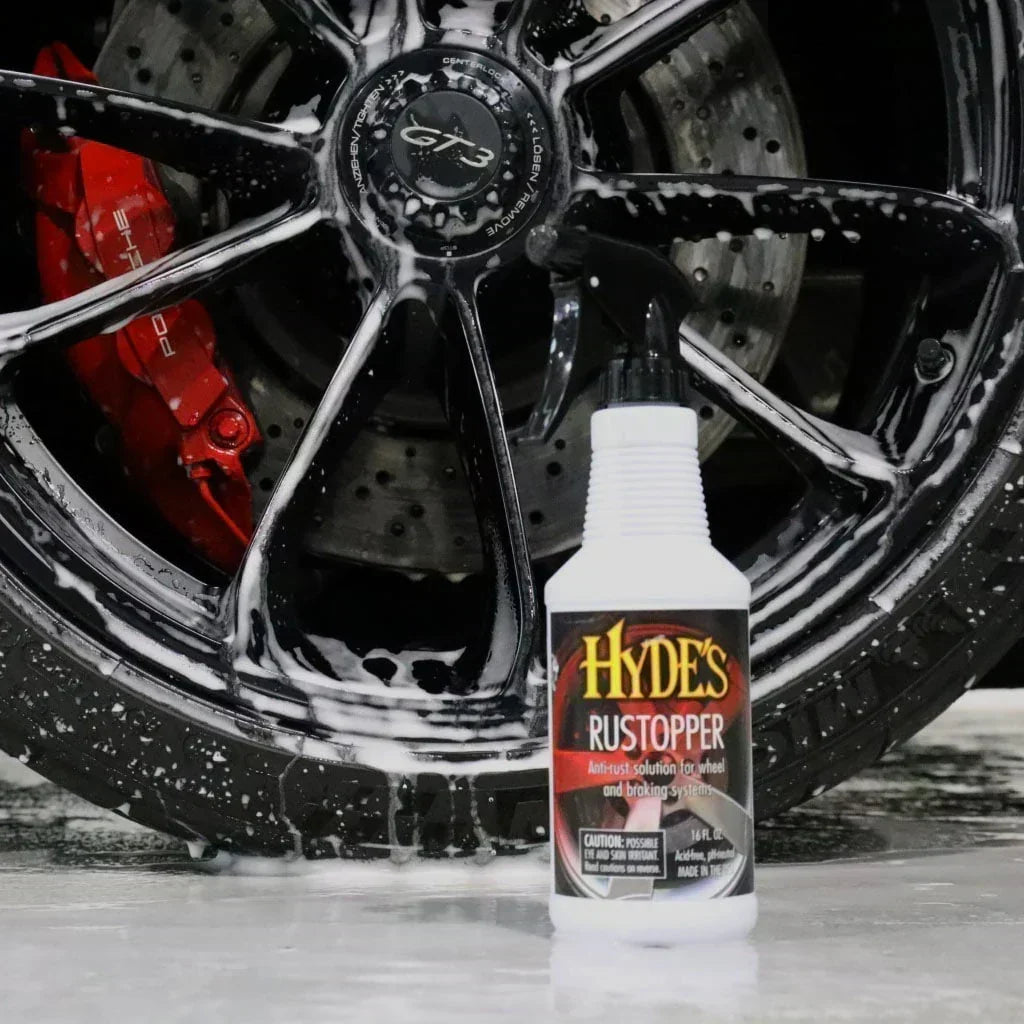
That became Hyde's Serum Rustopper.
Rustopper is designed as a simple finishing step after washing. The Automotive formula provides rust and oxidation protection for braking systems and appropriate exposed metal surfaces.
Its purpose is straightforward:
Help prevent flash rust and oxidation after washing or water exposure, while reducing the rust dust that can spoil freshly cleaned wheels.
Rustopper is acid-free and pH-neutral and is formulated for use on appropriate metal, chrome, painted and coated surfaces, and braking systems when used according to the product directions.
Learn more about the story behind Hyde's Serum and Rustopper
How to Apply Rustopper After Washing
For automotive use, follow the product label.
After washing the braking system or appropriate metal surfaces:
- Rinse thoroughly.
- Leave the surface wet.
- Spray Rustopper evenly onto the brake rotors and appropriate metal surfaces.
- Allow the treated surface to dry completely.
- Wipe away excess where necessary.
For best results, use the product in the shade on cool surfaces. If applying in direct sunlight, follow the label directions regarding removal of excess product.
Always read and follow the complete product directions and precautions before use.
Shop Hyde's Serum Rustopper for Automotive
Can You Completely Stop Brake Rotors From Ever Rusting?
That's not the right promise to make.
Iron naturally oxidizes when the conditions are right. No responsible maintenance advice should suggest that the laws of chemistry have somehow been eliminated.
The practical goal is corrosion prevention and control.
Reduce the conditions that encourage oxidation.
Remove corrosive contaminants.
Protect appropriate exposed surfaces.
Maintain the vehicle consistently.
That is a more realistic approach than waiting until corrosion becomes established and then trying to reverse it.
Frequently Asked Questions About Brake Rotor Rust
Why do my brake rotors turn orange after washing?
Most conventional brake rotors contain iron. When the exposed rotor surface gets wet and remains in contact with oxygen, a thin layer of surface oxidation can form quickly. This is commonly called flash rust.
Can brake rotors rust overnight?
Yes. Surface rust can develop while a vehicle sits after rain, washing or exposure to humid conditions.
Is flash rust on brake rotors dangerous?
Ordinary light surface rust is commonly removed from the rotor friction surface through normal braking. Heavy corrosion, deep pitting or changes in braking performance are different and should be inspected professionally.
Why do my wheels get orange dust after washing?
As the brake pads clean surface oxidation from the rotor, iron-containing particles can contribute to the brake and road contamination around your wheels. Dark wheels tend to make the orange-brown residue particularly noticeable.
Will driving remove brake rotor rust?
Normal brake use generally removes light surface oxidation from the working face of a conventional rotor.
Can brand-new brake rotors rust?
Yes. New iron brake rotors can develop surface oxidation when exposed to moisture.
Does rain cause brake rotor rust?
It can. Washing isn't unique in this respect. Rain, wet roads and humid conditions can all provide the moisture necessary for oxidation.
Does road salt cause more brake corrosion?
Road salt creates a more aggressive environment for corrosion. Regularly removing salt and winter contaminants is an important part of vehicle maintenance.
Should I avoid washing my brakes to prevent flash rust?
No. Avoiding cleaning can leave salt and other corrosive contaminants in place. A better approach is to rinse thoroughly and use an appropriate post-wash maintenance routine.
Can I put WD-40 or another lubricant on my brake rotors?
Don't apply general-purpose oils or lubricants to a brake friction surface. Only use products that are specifically intended for the application, and always follow their directions.
What is Rustopper?
Rustopper is Hyde's Serum's corrosion-protection product designed to help prevent flash rust and oxidation after washing or water exposure.
When should Rustopper be applied?
For the Automotive product, Rustopper is applied after washing and rinsing while the appropriate metal surfaces are still wet. Follow the directions on the product label.
Does Rustopper replace normal brake maintenance?
No. Rustopper is a corrosion-prevention product. It does not replace brake inspections, repairs or manufacturer-recommended maintenance.
Keep the Clean Look After the Wash
The orange rotor you see after washing isn't mysterious.
It's chemistry.
Expose iron to moisture and oxygen and oxidation can begin quickly. On conventional brake rotors, light surface rust is common and normally gets cleaned from the working surface once the vehicle is driven.
For many drivers, that's the end of the story.
For enthusiasts, collectors and professional detailers, there's another consideration.
You spent the time getting the wheels clean. You shouldn't have to watch bright orange rotors appear behind them before the car has even left the driveway.
That's the problem Rustopper was created to address.
Make it the finishing step after your wash:
Wash. Rinse. Protect.
Watch Rustopper Being Applied
Want to see the process? This independent demonstration from Sky's the Limit Car Care shows Rustopper being used as part of a wheel-cleaning routine.
Explore More Rust Prevention Guides
Rust affects more than cars. Explore our growing resource center for practical corrosion-prevention advice for motorcycles, bicycles, boats and trailers.
Coming soon:
How to Prevent Motorcycle Rust After Washing, Rain and Storage
How to Prevent Rust on Bicycle Disc Brakes, Chains and Drivetrains
How to Prevent Rust and Corrosion on Boats and Boat Trailers
Share:
The Battle Against Rust: Why Prevention Matters
How to Prevent Rust and Corrosion on Boats and Boat Trailers