

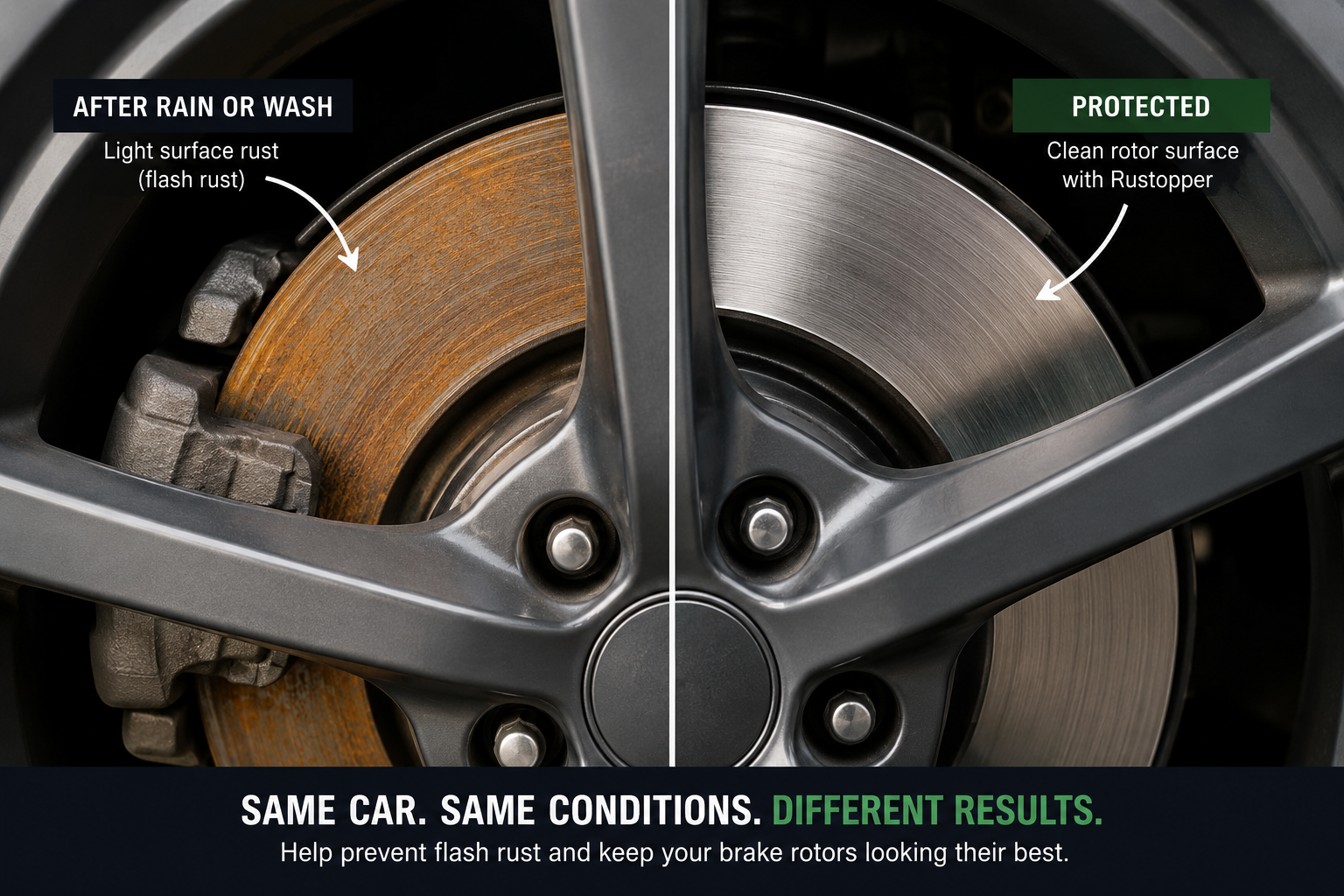
You wash your car, clean the wheels, and leave everything looking spotless. Later that day, you notice an orange coating beginning to appear across the brake rotors.
Or perhaps the car simply sat outside overnight in the rain.
Seeing rust on part of the braking system can be alarming, but a light orange film on brake rotors after exposure to moisture is common. Brake rotors have exposed metal surfaces, and those surfaces can begin oxidizing surprisingly quickly when water and oxygen are present.
The more useful question is not simply whether brake rotors can rust. It is understanding what kind of rust you're seeing, why it appeared, and when it deserves closer attention.
Why Do Brake Rotors Rust So Quickly?
Most brake rotors contain a significant amount of iron and operate with exposed friction surfaces.
Unlike painted body panels, the area where the brake pad contacts the rotor cannot simply be covered with a conventional protective paint or coating. It needs to remain suitable for braking.
That leaves the rotor surface exposed to the environment.
Add water from rain, washing, humidity, or road spray, and surface oxidation can begin. The result is often the thin orange or brown film commonly called flash rust.
This is why rotors can look clean immediately after a wash and noticeably orange a short time later.
Is Light Surface Rust on Brake Rotors Normal?
A light film of surface oxidation following rain, washing, or other moisture exposure is common.
If a vehicle has been sitting outside during wet weather, you may even notice the rotor surface changing color before the rest of the vehicle has fully dried.
That does not mean every form of brake rotor corrosion should be ignored.
There is an important difference between light, recent surface oxidation and more established corrosion associated with prolonged exposure, storage, deterioration, or other mechanical concerns.
If a rotor appears heavily corroded, deeply pitted, uneven, damaged, or you notice unusual braking behavior, noise, vibration, or other braking concerns, the appropriate response is to have the braking system inspected by a qualified professional.
A rust-prevention product is not a substitute for brake inspection or repair.
Why Brake Rotors Rust After Rain
Rain creates the same basic conditions as washing: moisture reaches an exposed iron-containing surface.
A car that sits outside during a rainstorm may therefore develop visible rotor oxidation without being driven anywhere.
Humidity and environmental conditions can influence how quickly the change becomes noticeable. Coastal environments, winter road conditions, salt exposure, and extended periods of damp weather can also create more challenging conditions for exposed metals.
Surface oxidation can develop surprisingly quickly. If you've noticed clean rotors becoming orange while your vehicle sits, see why brake rotors can rust overnight for a closer look at rain, dew, condensation and humidity.
This explains why one vehicle may show visible orange rotors relatively quickly while another appears to take longer.
The underlying issue is still the combination of exposed metal, moisture, and oxygen.
Why Brake Rotors Rust After Washing
Car washing can make flash rust especially noticeable because of the contrast.
You've just spent time removing brake dust and road grime from the wheels. The wheels look clean, the tires are dressed, and the paint is freshly detailed.
Then the rotor begins turning orange behind that freshly cleaned wheel.
Water used during washing and rinsing reaches the exposed rotor surface. If conditions allow oxidation to begin before everything is completely dry, that familiar orange film can appear.
For a more detailed look specifically at the post-wash problem, read our Brake Rotor Rust Prevention Guide.
What Is the Orange Residue Around the Wheels?
After surface oxidation develops on the rotor, driving and braking can affect the appearance of the rotor surface.
In some situations, rust-colored residue may become visible around the wheel area, which is particularly frustrating after the wheels have just been cleaned.
For enthusiasts and professional detailers, that can turn a small amount of surface oxidation into a larger appearance issue.
It is one reason preventing post-wash flash rust can be preferable to dealing with the visible results afterward.
Surface Rust and Established Corrosion Are Not the Same Thing
The word "rust" covers a wide range of conditions.
A thin orange film that appears shortly after washing is not the same situation as a component that has experienced prolonged corrosion.
Flash rust is associated with rapid surface oxidation following moisture exposure. More established corrosion can develop over longer periods and may involve deterioration beyond a superficial change in color.
This distinction matters when discussing prevention.
Hyde's Serum Rustopper is designed to help prevent flash rust and oxidation. It is not intended to remove established rust or reverse existing corrosion.
If significant corrosion already exists, the appropriate solution may involve cleaning, service, replacement, or professional inspection depending on the component and its condition.
Can You Help Prevent Brake Rotor Flash Rust?
For people who regularly wash and detail their vehicles, prevention can be incorporated into the wash routine.
The goal is to address appropriate exposed metal surfaces during the period when moisture would otherwise create favorable conditions for oxidation.
Hyde's Serum Rustopper is designed for this purpose.
For automotive applications, Rustopper can be incorporated into the post-wash process for brake rotors and appropriate exposed metal surfaces according to the product directions.
That creates a straightforward detailing sequence:
Wash → Rinse → Apply Rustopper → Dry → Finish Detailing
Always follow the complete directions and precautions on the product label and use the product only on appropriate surfaces.
You can learn more about products intended for this application through Automotive Rust and Corrosion Protection.
What About Cars That Sit Outside?
Vehicles do not have to be freshly washed to encounter moisture.
Cars parked outdoors are repeatedly exposed to rain, morning moisture, humidity, temperature changes, and road conditions. Vehicles that sit for longer periods may experience different corrosion conditions from cars driven regularly.
The same is true for collector cars and seasonal vehicles kept in environments where moisture can fluctuate.
Rust prevention is therefore best viewed as part of an overall maintenance approach rather than a one-time treatment intended to solve every form of corrosion.
Keeping vehicles clean, addressing environmental contaminants, following appropriate storage practices, and protecting suitable exposed metal surfaces can all play a role.
When Should Brake Rotor Rust Be Inspected?
Appearance alone cannot diagnose the condition of a braking system.
If you are uncertain about the condition of your brake rotors, or if corrosion appears substantial rather than superficial, have the braking system inspected by a qualified technician.
The same applies if you experience changes in braking performance, unusual vibration, persistent noises, or visible damage.
Rust prevention is about helping reduce avoidable surface oxidation. It should never be used to conceal or dismiss a mechanical problem.
The Bottom Line
So, is rust on brake rotors normal?
A light layer of surface oxidation after rain, washing, or moisture exposure is common because brake rotors contain exposed iron-bearing metal.
That does not mean all rotor corrosion is the same.
Recent flash rust is different from established or severe corrosion, and anything that raises concerns about the condition or performance of the braking system should be evaluated professionally.
For drivers and detailers primarily concerned about the orange flash rust that appears after washing, prevention can become part of the regular detailing process.
Learn more about Automotive Rust and Corrosion Protection →
Shop Hyde's Serum Rustopper for Automotive →

Share:
How Automotive and Motorcycle Dealerships Can Help Prevent Rust After Washing
Why Motorcycles Rust After Washing and How to Help Prevent It