

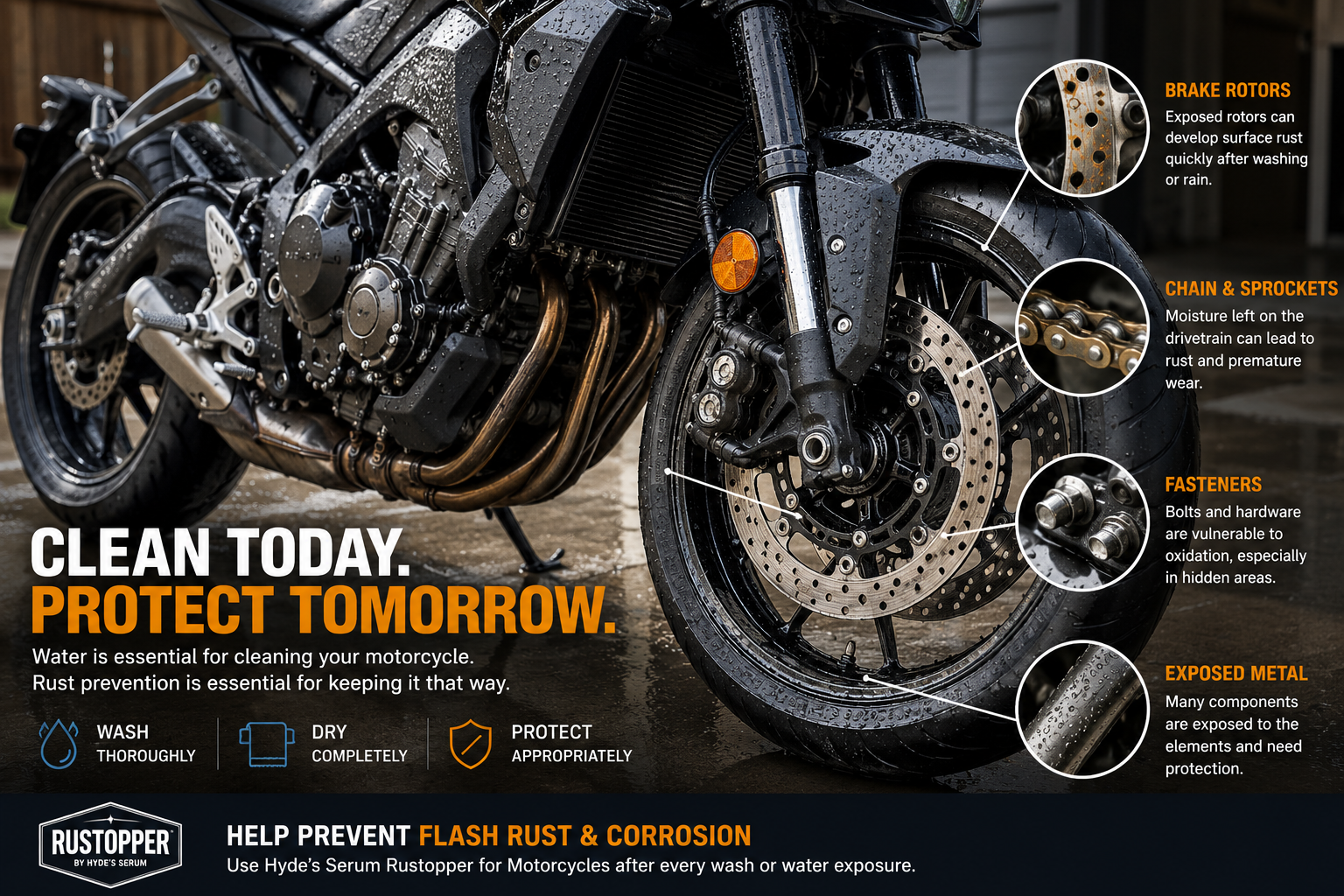
You finish washing your motorcycle, dry the paint, clean the wheels, and step back to admire it. Then you notice something that wasn't there before.
A light orange film has started appearing on a brake rotor. Maybe there is discoloration around the chain, sprocket, fasteners, or another exposed metal surface.
It can happen surprisingly quickly.
Motorcycles present a particular challenge when it comes to rust because so much of the machine is exposed. Water can reach components that would be hidden behind bodywork on a car, and after washing, moisture can remain in small spaces long after the motorcycle appears dry.
Understanding why this happens is the first step toward preventing it.
Why Can a Motorcycle Rust After Washing?
Rust requires a few basic ingredients: iron-containing metal, oxygen, and moisture.
Washing a motorcycle provides plenty of moisture.
Brake rotors, chains, sprockets, fasteners, and other exposed metal components may all come into contact with water during washing and rinsing. If moisture remains on an appropriate metal surface, oxidation can begin.
Some of that oxidation can become visible very quickly.
This is often called flash rust, particularly when a light layer of orange surface oxidation appears shortly after washing or water exposure.
The motorcycle doesn't necessarily need to be neglected for this to happen. In fact, you may notice flash rust precisely because you just cleaned the motorcycle and are paying close attention to its appearance.
Why Motorcycle Brake Rotors Can Turn Orange
Brake rotors are one of the most noticeable places for post-wash oxidation.
Their friction surfaces are exposed by design. Water from a hose, pressure washer, wash mitt, or rinse can reach them easily.
After washing, a clean rotor surface may begin developing a light orange or brown appearance as moisture and oxygen interact with the exposed metal.
Rain can create similar conditions.
A motorcycle parked outside during wet weather can develop visible surface oxidation on its brake rotors even though it hasn't been washed.
This is why riders sometimes discover orange brake rotors after a rainy night or shortly after cleaning the bike.
Light surface oxidation and significant corrosion are not the same thing, however. If a brake rotor appears heavily corroded, damaged, deeply pitted, or you have any concern about braking performance, have the braking system inspected by a qualified motorcycle technician.
Rust-prevention products are not substitutes for proper brake maintenance or repair.
Motorcycle Chains and Sprockets Face Different Conditions
The drivetrain presents another rust-prone area.
A motorcycle chain operates in an exposed environment where it encounters water, dirt, road grime, and other contaminants. Washing can remove that contamination, but it can also leave moisture behind.
Proper chain maintenance depends on the motorcycle and the type of chain being used, so riders should always follow the motorcycle and chain manufacturer's cleaning and lubrication recommendations.
The important point is simple: washing should not end when the dirt is gone.
Drying, inspection, appropriate lubrication, and corrosion prevention should all be considered part of the process.
The same principle applies to sprockets and other appropriate exposed metal surfaces.
Rain Creates Many of the Same Problems as Washing
You don't have to wash a motorcycle for moisture-related oxidation to occur.
A bike ridden through rain can collect water in places that are easy to overlook. A motorcycle stored outdoors may remain damp even after the visible surfaces appear dry.
Humidity can also contribute to the conditions that encourage oxidation.
This becomes particularly relevant for riders in coastal environments, humid climates, or areas where motorcycles encounter road salt and other corrosive contaminants.
After wet-weather riding, giving the motorcycle some attention before putting it away can help reduce the amount of moisture that remains on exposed components.
Drying the Motorcycle Matters
One of the simplest steps after washing is also one of the easiest to rush.
Dry the motorcycle thoroughly.
Water can remain around fasteners, between components, around the drivetrain, near the wheels, and in other recessed areas even after the fuel tank and bodywork look completely dry.
Use an appropriate drying method for your motorcycle and pay attention to areas where water tends to collect.
This is also a good opportunity to inspect the bike.
A regular wash can reveal loose hardware, damaged finishes, accumulated grime, early oxidation, or other maintenance concerns that were harder to see when the motorcycle was dirty.
Add Rust Prevention to the Wash Routine
For riders who wash frequently or regularly encounter wet conditions, rust prevention can become another part of routine motorcycle care.
The objective is not to cover every component indiscriminately. Different motorcycle surfaces have different requirements.
Instead, the goal is to protect appropriate exposed metal surfaces according to the product and motorcycle manufacturer's instructions.
Hyde's Serum Rustopper for Motorcycles is designed to help prevent flash rust and oxidation after washing or water exposure. It can be incorporated into a motorcycle cleaning and maintenance routine for appropriate applications according to the directions on the product label.
That means rust prevention can happen while you're already maintaining the motorcycle rather than waiting until visible oxidation becomes a larger problem.
For motorcycle-specific options, see our Motorcycle Rust and Corrosion Protection collection.
Prevention Is Not the Same as Rust Removal
This distinction is important.
A product intended to help prevent flash rust should not be confused with a rust remover or a repair for established corrosion.
Rustopper is designed to help prevent flash rust and oxidation. It is not intended to reverse established corrosion or repair damaged metal.
If corrosion is already substantial, the appropriate response depends on the affected component. Cleaning, servicing, refinishing, replacement, or professional inspection may be necessary.
That is particularly important with safety-critical motorcycle components.
Prevention works best as part of regular care before corrosion becomes established.
Don't Forget Storage
How a motorcycle is stored can be just as important as how it is washed.
Putting a motorcycle away while it is still wet can leave moisture sitting on exposed components for an extended period.
For motorcycles stored seasonally, preparation becomes even more important. A bike that will sit for weeks or months should be cleaned, dried, maintained, and stored according to the motorcycle manufacturer's recommendations.
Storage conditions matter too. Humidity and temperature changes can expose metal surfaces to moisture even when the motorcycle isn't being ridden.
A clean motorcycle is a good starting point. A clean, dry, properly maintained motorcycle is better.
A Better Post-Wash Routine
Motorcycle washing shouldn't be complicated, but it should be complete.
Think beyond simply removing dirt.
A good routine includes washing the motorcycle appropriately, rinsing away cleaning products and contaminants, addressing appropriate exposed metal surfaces, drying thoroughly, and completing any necessary chain or other maintenance according to manufacturer recommendations.
Rust prevention fits naturally into that process.
The result is not a promise that a motorcycle will never experience corrosion. Motorcycles operate in the real world, where rain, humidity, road contamination, storage conditions, and normal wear all matter.
The goal is simpler: reduce avoidable flash rust and oxidation by addressing moisture exposure before it becomes a larger problem.
For riders who want to incorporate rust prevention into their regular wash and maintenance routine, explore Hyde's Serum Rustopper for Motorcycles and always follow the complete directions and precautions on the product label.

Share:
Is Rust on Brake Rotors Normal? Causes, When to Worry, and Prevention
Boat Trailer Rust Prevention After Saltwater Launches