

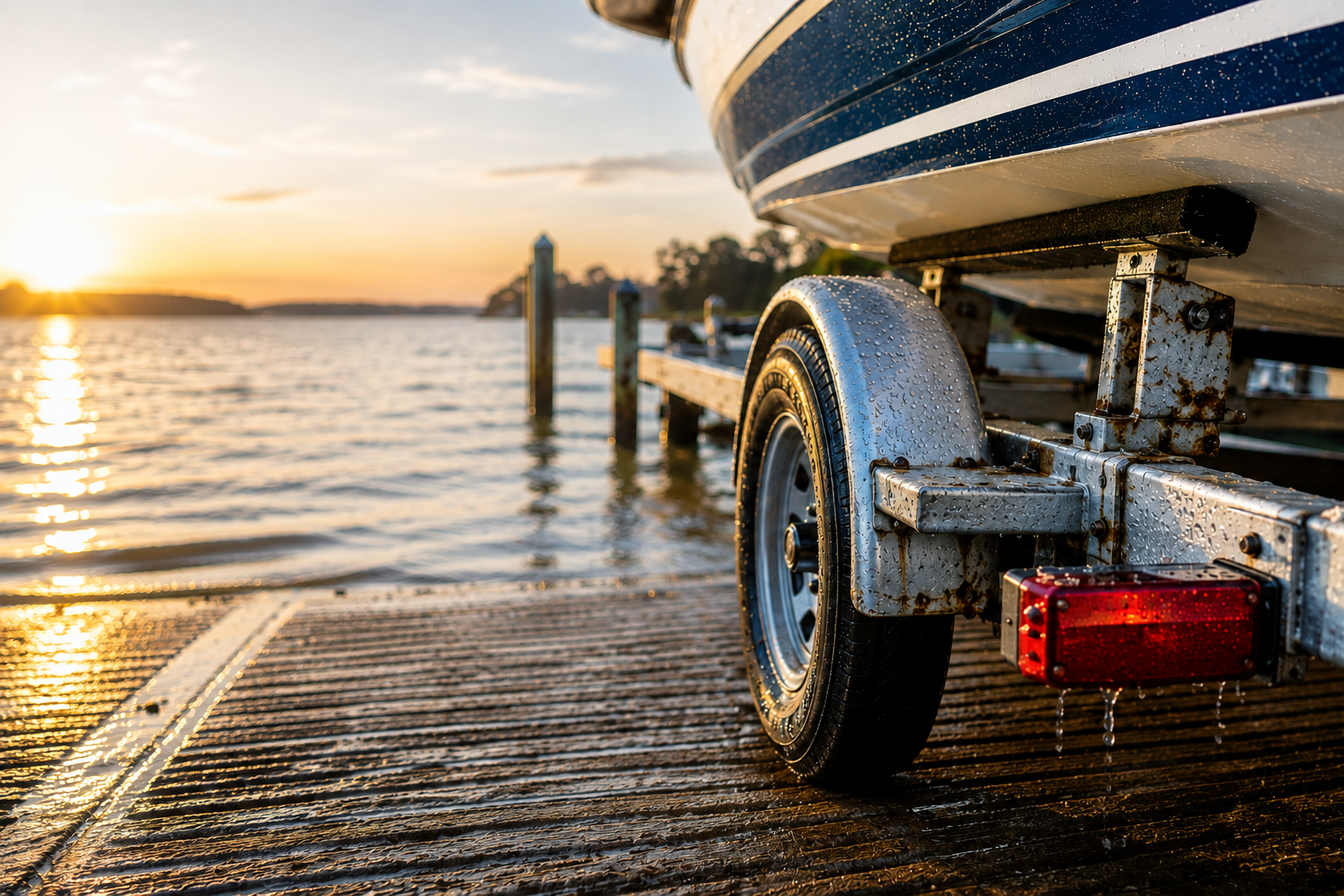
A boat trailer may spend only minutes submerged during a launch or retrieval, but those few minutes can expose metal components to one of the harshest corrosion environments they encounter.
Saltwater doesn't need to visibly remain on a trailer for corrosion concerns to continue. Salt residue can remain after water evaporates, while moisture can become trapped around hardware, joints, brakes and other difficult-to-dry areas.
That makes what you do after retrieving your boat from saltwater especially important.
Why Saltwater Is Hard on Boat Trailers
Corrosion occurs when susceptible metals interact with their environment. In marine environments, the combination of water, oxygen and dissolved salts can create particularly aggressive corrosion conditions.
Technical literature available through the NOAA Central Library discusses corrosion in the marine environment, including electrochemical corrosion processes involving seawater and metals.
A boat trailer repeatedly encounters marine wet/dry exposure by design.
During launching and retrieval, saltwater and spray can reach:
- frame components
- fasteners and hardware
- suspension components
- hubs
- brake components
- couplers and safety-chain hardware
- brackets
- exposed metal edges
- scratches or damaged coatings
Some areas rinse and dry easily.
Others don't.
That's why boat trailer protection should be treated as an ongoing maintenance routine rather than a one-time treatment.
Rinse After Saltwater Exposure
One of the simplest steps after a saltwater launch is also one of the most important:
Remove the salt residue.
The University of Florida IFAS boat-trailer maintenance guide provides practical guidance on maintaining boat trailers, including corrosion prevention and trailer care.
After saltwater use, thoroughly rinse the trailer with fresh water.
Don't focus only on the large, easily visible frame rails. Pay attention to areas where spray and saltwater can collect or remain trapped, while following the trailer manufacturer's maintenance recommendations for hubs, brakes, electrical components and other systems.
The objective isn't merely to make the trailer look clean.
It's to remove contamination before the trailer sits in storage.
Brake rotors are especially vulnerable after repeated water exposure. If your trailer's rotors turn orange after retrieval, see our guide to boat trailer brake rotor rust after launching for a closer look at surface oxidation, saltwater corrosion, prevention, and the warning signs that deserve attention.
Don't Overlook Drying
Rinsing removes contamination, but it also introduces more water.
Allowing the trailer to drain and dry is therefore part of the process.
Areas with poor airflow can stay wet considerably longer than broad exposed surfaces. Hardware, brackets, seams, joints and overlapping components deserve particular attention because retained moisture can allow corrosion conditions to persist after the rest of the trailer appears dry.
If the trailer is immediately parked in an enclosed or poorly ventilated location while still wet, drying can take longer.
A useful post-launch routine therefore isn't simply:
Rinse.
It's:
Rinse → drain → dry → inspect.
Inspect the Trailer While It's Clean
Post-launch cleaning provides an excellent opportunity to spot developing problems.
Look for:
- new orange or brown discoloration
- damaged protective coatings
- exposed metal
- corrosion around fasteners
- deteriorating hardware
- rust around brackets and seams
- corrosion around brake or suspension components
- blocked frame drain holes
- areas that remain wet significantly longer than surrounding surfaces
Pay particular attention to joints, welds and connection points.
Catching a small problem early is much easier than discovering widespread corrosion later.
Structural deterioration, significant rust-through or questionable safety components should be evaluated appropriately rather than treated simply as a cosmetic rust problem.
Galvanized Trailers Still Need Attention
Galvanizing provides valuable corrosion resistance, but corrosion resistant should not be confused with maintenance free.
The zinc layer on galvanized steel helps protect the underlying steel, but real-world trailers can still develop vulnerable areas.
Protective surfaces can be damaged. Cut edges, scratches and worn areas can behave differently from intact coated surfaces. Fasteners and other hardware may also be made from different materials than the main trailer frame.
Repeated saltwater exposure creates demanding conditions for all of these components.
Freshwater rinsing and routine inspection therefore remain worthwhile even on trailers specifically designed for marine use.
Painted and Powder-Coated Trailers
Paint and powder coating protect underlying metal by creating a barrier between the metal and its environment.
That protection depends on the coating remaining intact.
A stone chip, scratch or damaged edge can expose the metal beneath. Once moisture reaches that exposed area, corrosion can begin even though the surrounding coating still looks good.
Pay particular attention to damaged areas rather than assuming the rest of the coating will protect them.
If repairs to protective coatings are necessary, follow the trailer or coating manufacturer's recommendations for the particular material and application.
Pay Attention to Hardware, Welds and Connections
Trailer corrosion isn't limited to large frame surfaces.
Bolts, nuts, brackets, chains, welds and other hardware can all experience repeated water exposure.
These areas also contain joints and interfaces where moisture can remain after the broad frame surfaces appear dry.
Routine inspection is therefore particularly useful around connection points.
Replace deteriorated structural or safety-related hardware when appropriate rather than relying on cosmetic treatment.
Trailer Brakes Require Special Attention
Boat-trailer brake systems deserve their own section because launching can expose braking components directly to water and corrosive marine environments.
This is one of the strongest reasons to follow the brake and trailer manufacturer's post-saltwater maintenance instructions.
Dexter's official technical resource center provides current manufacturer manuals and maintenance information covering trailer braking and running-gear systems.
Follow the trailer and brake manufacturer's flushing, inspection and maintenance recommendations for your specific system.
If braking components show significant corrosion, abnormal wear or performance problems, have them professionally inspected.
A rust-prevention routine should complement proper mechanical maintenance — never replace it.
What About Freshwater Launches?
Freshwater is generally less aggressive than saltwater, but that doesn't mean corrosion is impossible.
The trailer is still being exposed to moisture, and mud, road contamination and other debris can remain on components and hold moisture against surfaces.
Rinsing, drying and inspection therefore remain useful habits even after freshwater use, particularly when the trailer will sit unused for an extended period.
The difference is one of environment and severity rather than the basic maintenance principle.
Protecting Exposed Metal After Cleaning
Once surfaces are clean and appropriately dry, susceptible exposed metal can be protected with products intended for the specific application.
Hyde's Serum developed Rustopper Boat & Trailer Rust Prevention to help protect appropriate metal surfaces against flash rust, oxidation and corrosion associated with water exposure.
Always follow the current product directions and avoid applying products to components or surfaces for which they are not intended.
Rust prevention should be considered one part of the overall process:
Rinse → dry → inspect → protect.
It does not replace proper maintenance, repair or replacement of deteriorated trailer components.
Storage Matters Too
What happens after the launch can be just as important as what happens at the ramp.
Before extended storage:
- remove salt and contamination
- allow wet areas to drain and dry
- inspect for developing corrosion
- address damaged protective coatings
- inspect safety-related hardware
- follow manufacturer maintenance requirements for brakes, hubs and bearings
- protect appropriate exposed metal surfaces
A trailer that is repeatedly launched, rinsed and then stored without inspection can accumulate small corrosion problems that remain unnoticed until they become much more obvious.
Where practical, storage conditions that allow the trailer to dry rather than remain persistently damp are preferable.
Build a Repeatable Post-Launch Routine
Boat trailer rust prevention doesn't have to be complicated.
The key is consistency.
A practical routine is:
1. Retrieve the boat
2. Thoroughly rinse the trailer with fresh water
3. Allow water to drain
4. Allow components to dry
5. Inspect vulnerable areas
6. Protect appropriate exposed metal surfaces
7. Store the trailer appropriately
This sequence addresses both contamination and moisture rather than waiting for visible rust before taking action.
For a broader look at protecting marine equipment, read Hyde's guide to preventing rust and corrosion on boats and boat trailers.
Technical Sources & Further Reading
For readers interested in the science and maintenance recommendations behind this guide, these resources provide additional information.
NOAA Central Library — Corrosion in the Marine Environment
Technical background on marine corrosion and the behavior of metals exposed to seawater and marine environments.
Read the NOAA technical publication
University of Florida IFAS — Boat Trailer Maintenance
Practical university-extension information covering boat-trailer maintenance and corrosion prevention.
Read the University of Florida IFAS publication
Dexter — Trailer Technical Resources
Manufacturer manuals and technical information for trailer brakes, axles and related running gear.
Visit Dexter's technical resource center
The Bottom Line
Boat trailers are built to work around water, but repeated water exposure — particularly saltwater exposure — still creates demanding conditions for metal components.
Freshwater rinsing, proper drying, regular inspection and appropriate protection can help reduce the conditions that allow rust and corrosion to develop.
The goal isn't to make a working trailer immune to its environment.
It's to remove salt, minimize prolonged moisture exposure, protect appropriate surfaces and catch corrosion or maintenance problems while they're still manageable.
For additional protection after cleaning, learn more about Rustopper Boat & Trailer Rust Prevention.
Share:
Why Motorcycles Rust After Washing and How to Help Prevent It
Why Do Brake Rotors Rust Overnight? Causes and Prevention