

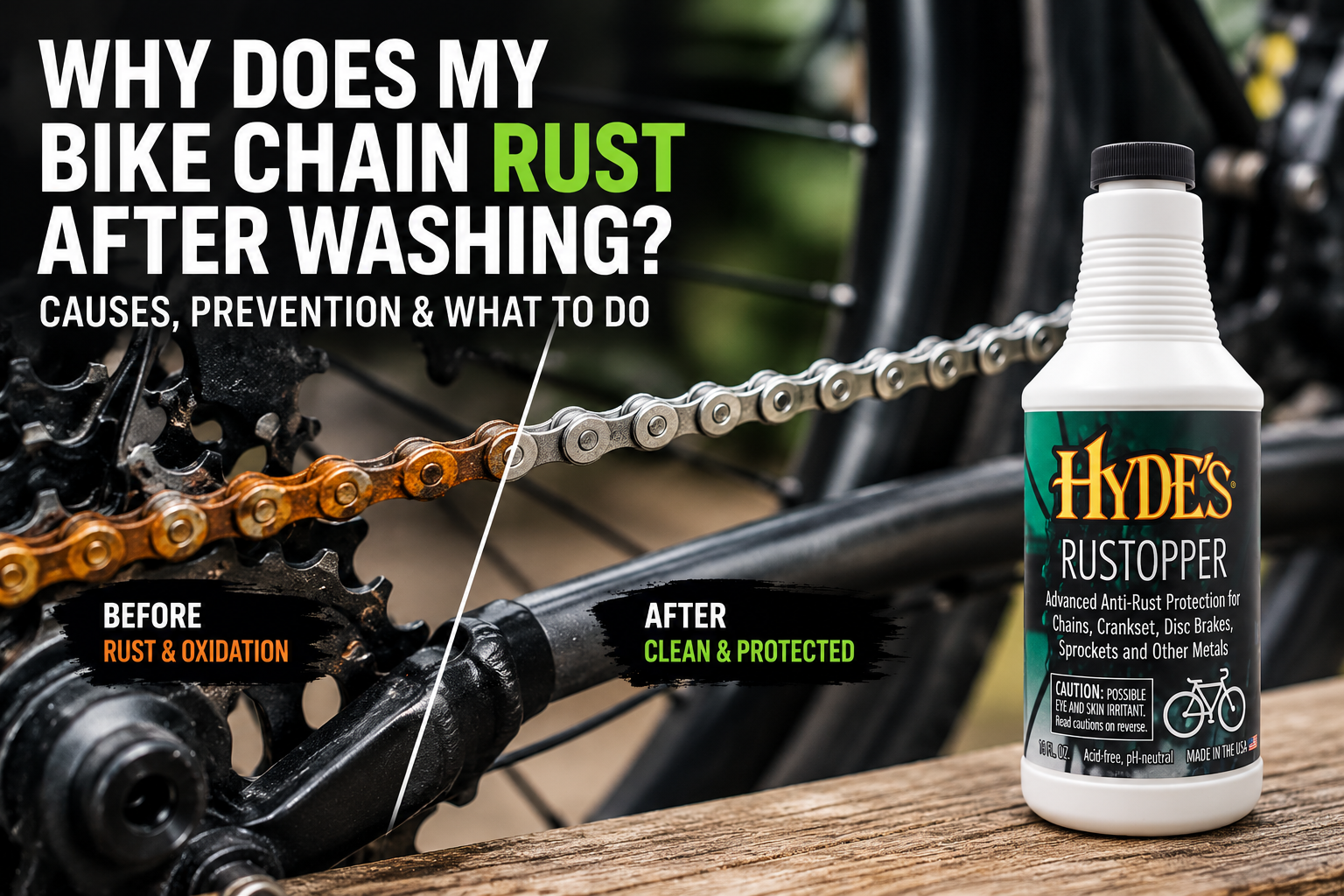
You wash your bike, clean the drivetrain, rinse away the dirt and grime, and put the bike away looking spotless.
Then you come back later and notice something you weren't expecting:
Orange or brown rust beginning to appear on the chain.
In some cases, it can seem like the bike chain rusted almost overnight.
This can happen because washing removes dirt and contaminants but also introduces water into one of the most corrosion-prone areas of a bicycle. If moisture remains on exposed steel components long enough, surface oxidation can begin surprisingly quickly.
Understanding why it happens—and what to do immediately after washing—can help keep your drivetrain cleaner and better protected.
Why Do Bike Chains Rust?
Many bicycle chains contain steel components.
Steel provides the strength and durability needed to transfer power from your pedals to the rear wheel, but iron-containing steel can also oxidize when exposed to moisture and oxygen.
The basic chemistry is well established. The U.S. Geological Survey explains that iron-containing materials rust when exposed to oxygen and water, forming iron oxides responsible for the familiar reddish coloration associated with rust.
In simple terms, rust formation requires several ingredients:
Iron + water + oxygen → corrosion
Real-world conditions can make the process more complicated. Humidity, salts, contaminants, temperature, surface condition and the amount of time moisture remains present can all influence corrosion.
That means a freshly washed bicycle can provide exactly the conditions corrosion needs if the chain remains wet afterward.
Why Does a Bike Chain Rust After Washing?
Washing your bike isn't inherently bad for the chain.
In fact, cleaning is an important part of bicycle maintenance because the drivetrain accumulates dirt, road grime, dust, perspiration, salts and other contaminants.
The problem is what happens after the cleaning process.
When you wash the drivetrain, water can remain:
- Between chain links
- Around rollers
- Between inner and outer plates
- Around pins
- On sprockets and chainrings
- In other difficult-to-dry areas
The outside of the chain may appear dry while moisture remains trapped within or between components.
If the bicycle is then stored—particularly somewhere humid—surface oxidation may begin before all that moisture has evaporated.
This is why drying the chain after washing is an important part of bicycle maintenance, not simply a cosmetic step.
Can a Bike Chain Really Rust Overnight?
Yes, visible surface oxidation can sometimes develop rapidly when susceptible metal remains exposed to moisture.
The exact rate depends on the chain material, surface treatment, existing protection, contaminants and environmental conditions.
A bike washed in a dry climate and immediately dried may behave very differently from one washed and then stored wet in a humid garage.
This is also why cyclists sometimes discover rust the morning after:
- Washing a bicycle
- Riding in the rain
- Transporting a wet bicycle
- Riding near saltwater
- Riding on salted winter roads
- Storing a damp bike overnight
The rust didn't necessarily appear because the chain was defective.
The combination of moisture, exposed metal and time created favorable conditions for oxidation.
Is Surface Rust on a Bike Chain a Serious Problem?
Not every small orange spot means the chain is ruined.
Light surface oxidation and advanced corrosion are very different conditions.
A small amount of recent surface rust may primarily affect the chain's appearance, particularly if it is caught early.
More substantial corrosion deserves greater attention.
Look for signs such as:
- Heavy rust accumulation
- Stiff or seized links
- Significant pitting
- Links that don't articulate freely
- Unusual drivetrain noise
- Poor shifting
- Visible physical deterioration
- Excessive chain wear or elongation
If the chain is significantly corroded, damaged or worn, corrosion prevention isn't the solution.
The chain should be inspected and replaced when necessary.
Rust prevention helps protect serviceable components; it does not restore the structural integrity of a damaged chain.
Why Cleaning Alone Isn't Enough
This is an important distinction.
Cleaning and corrosion prevention accomplish different jobs.
Cleaning removes things you don't want on the drivetrain:
- Dirt
- Grit
- Road contamination
- Old lubricant
- Salt
- Mud
- Other accumulated contaminants
But after cleaning and rinsing, the drivetrain may be left exposed to water.
That's why a complete maintenance process shouldn't necessarily end with the rinse.
A better way to think about bicycle care is:
Clean → Rinse → Dry → Lubricate and protect as appropriate
Each step has a different purpose.
How to Help Prevent Bike Chain Rust After Washing
Proper drying isn't just a Hyde's Serum recommendation.
Shimano's bicycle maintenance guidance recommends cleaning the chain, rinsing it with water and then immediately drying it with a rag or air compressor. Shimano specifically explains that drying is important because remaining moisture can cause oxidation and rust. Once the chain is clean and dry, Shimano recommends applying an appropriate bicycle chain lubricant.
That gives us a useful post-wash sequence:
Clean → Rinse → Dry → Lubricate/Protect as appropriate
1. Don't Leave the Bicycle Soaking Wet
Once washing is complete, don't simply roll the bike into a garage while water is still dripping from the drivetrain.
Remove as much standing water as practical.
A clean microfiber towel can help remove water from accessible surfaces.
Appropriately controlled air can also help move trapped water out of difficult areas.
Pay particular attention to the drivetrain.
2. Give the Chain Time to Dry
A chain contains numerous small interfaces where moisture can remain after the outside appears dry.
Allowing adequate drying time helps remove water that might otherwise remain around chain components.
Shimano's guidance specifically recommends immediately drying a rinsed chain before lubrication because moisture can contribute to oxidation and rust.
Environmental conditions matter.
Drying will generally happen differently in a warm, low-humidity environment than in a cool, damp garage.
3. Don't Forget About Salt
If you've ridden near the ocean, on salted winter roads, or anywhere the bicycle has encountered salt contamination, corrosion prevention becomes even more important.
Don't simply allow contaminated water to dry onto the bicycle.
Rinse appropriate surfaces with fresh water and follow a proper post-ride maintenance routine.
Lubrication and Rust Prevention Are Not Exactly the Same Thing
This distinction is frequently misunderstood.
A bicycle chain lubricant is primarily designed to reduce friction and wear within the chain while providing the performance characteristics appropriate for its intended riding conditions.
Corrosion prevention focuses on protecting susceptible metal from environmental exposure.
Some lubricants may also provide corrosion protection, but lubrication and corrosion prevention shouldn't automatically be treated as identical functions.
Shimano recommends applying bicycle-specific chain lubricant after the chain has been cleaned, rinsed and thoroughly dried. It also recommends applying lubricant to each roller and wiping away excess afterward.
Follow the chain manufacturer's recommendations and use bicycle-specific products appropriate for your drivetrain and riding conditions.
Be Extremely Careful Around Disc Brakes
This is one of the most important rules when applying any bicycle maintenance product.
Keep inappropriate lubricants, oils and contamination away from bicycle brake rotors and brake pads.
Disc braking systems depend on controlled friction.
Contaminating the rotor or pads can negatively affect braking performance and may require additional service or component replacement.
When treating a chain or other components near a disc-brake system, control the application carefully and follow the product manufacturer's instructions.
Never assume a product appropriate for a chain is automatically appropriate for a braking surface.
Shimano likewise recommends inspecting brake pads, calipers, hoses and rotors as part of routine bicycle maintenance and paying attention to signs of contamination or deterioration.
What About Rust on Bicycle Disc Brake Rotors?
Bicycle chains aren't the only metal components exposed to water.
Depending on their materials and construction, other bicycle components can also experience oxidation or corrosion.
However, the braking system should be treated separately from the drivetrain.
Don't indiscriminately spray general-purpose corrosion inhibitors or chain lubricants onto bicycle disc brake rotors.
If you're dealing with corrosion elsewhere on the bicycle, use products specifically appropriate for the component and application.
For a broader look at protecting different areas of a bicycle, see Hyde's Serum's guide to preventing rust on bicycle chains, disc brakes and drivetrains.
What If Your Bike Gets Caught in the Rain?
Rain creates a similar problem to washing.
The bicycle gets wet, but unlike a planned wash, you may arrive home tired and simply put the bike away.
That's when moisture can remain on the drivetrain for hours.
After a wet ride:
- Remove excessive water and contamination.
- Clean the drivetrain when conditions require it.
- Dry appropriate components.
- Inspect the chain and drivetrain.
- Lubricate and protect components as appropriate for their intended use.
- Store the bicycle somewhere reasonably dry.
The worst routine is often:
Wet ride → wet bike → closed garage → forget about it.
Mountain Bikes Need Extra Attention
Mountain bikes routinely encounter conditions that can be particularly hard on drivetrains:
- Mud
- Water crossings
- Wet vegetation
- Dirt
- Grit
- Frequent washing
Cleaning that contamination is important, but frequent washing also means frequent water exposure.
If you wash a mountain bike after almost every ride, your post-wash drying and drivetrain maintenance routine becomes especially important.
What About E-Bikes?
E-bikes have many of the same drivetrain corrosion concerns as conventional bicycles.
In some cases, the drivetrain may also experience substantial loads because of motor assistance.
That makes proper chain inspection, cleaning and lubrication particularly important.
Always follow the bicycle, drivetrain and e-bike manufacturer's maintenance recommendations, and observe all precautions relating to electrical components when cleaning an e-bike.
What About Bikes Stored in Garages?
A garage isn't automatically a dry environment.
Humidity can remain high, particularly during seasonal temperature changes.
Condensation can also occur when temperature conditions allow moisture from the air to collect on cooler surfaces.
So even if your bicycle never sits outside overnight, environmental moisture can still contribute to corrosion.
For long-term storage, start with a bicycle that is:
Clean, dry, properly maintained and appropriately protected.
Don't put a wet bicycle into long-term storage and expect moisture-related problems to disappear.
Where Rustopper for Bicycles Fits
Hyde's Serum developed Rustopper around a straightforward problem: exposed metal can begin oxidizing surprisingly quickly after water exposure.
Rustopper for Bicycles extends that corrosion-prevention approach to bicycle braking systems, drivetrain components such as chains and sprockets, and other appropriate exposed metal surfaces.
Rustopper for Bicycles is designed to help:
- Prevent flash rust and oxidation after washing or water exposure
- Protect appropriate exposed metal surfaces
- Reduce rust-related contamination
- Add corrosion protection to bicycle washing and storage routines
Importantly, Rustopper does not replace proper bicycle maintenance.
For chains, the appropriate lubricant or wax should still be applied after drying when required. Rustopper also does not replace brake inspection, drivetrain maintenance or component replacement.
Always follow the complete product directions and the recommendations of your bicycle and component manufacturers.
Frequently Asked Questions
Why did my bike chain turn orange after I washed it?
The orange coloration may be surface oxidation. Washing introduces water to exposed steel components, and if moisture remains long enough, oxidation can begin.
Can a bicycle chain rust overnight?
Under favorable conditions, visible surface oxidation can develop quickly. Humidity, residual moisture, salt and contaminants can influence corrosion.
Should I replace a rusty bike chain?
It depends on the condition of the chain. Minor recent surface oxidation is different from significant corrosion, pitting, seized links or excessive wear. A damaged or excessively worn chain should be replaced.
Should I lubricate my chain after washing?
Follow the chain and lubricant manufacturer's recommendations. Shimano recommends cleaning and drying the chain before applying bicycle-specific chain lubricant.
How do I prevent my bike chain from rusting after riding in the rain?
Don't leave the bicycle wet for extended periods. Remove contamination, dry appropriate components, inspect the drivetrain, and restore appropriate lubrication and corrosion protection according to product and component instructions.
Does saltwater make bicycle rust worse?
Salt-contaminated environments can increase corrosion concerns. Bicycles used in coastal or winter environments deserve particular attention to cleaning, drying and corrosion prevention.
Can Rustopper replace bicycle chain lubricant?
No. Rustopper is a corrosion-prevention product, not a substitute for bicycle chain lubricant. Apply the appropriate chain lubricant or wax after drying when required.
Can Rustopper repair an already rusted bicycle chain?
Rustopper is intended to help prevent rust and oxidation. It is not a repair for a chain that has suffered significant corrosion, wear or structural damage.
Sources & Further Reading
Shimano — Spring Tune-Up: Get Your Road or Gravel Bike Ready for the Ride
Shimano's maintenance guidance covers chain inspection, cleaning, immediate drying after rinsing, oxidation and rust prevention, proper chain lubrication and inspection of braking components.
Read Shimano's bicycle maintenance guidance
U.S. Geological Survey — Iron Oxides and Rust Formation
USGS provides useful background on the basic chemistry behind rust, including how iron-containing material oxidizes when exposed to oxygen and water.
Read the U.S. Geological Survey resource
Hyde's Serum — Complete Bicycle Rust Prevention Guide
For a broader discussion covering bicycle chains, disc brakes, drivetrains, storage, washing, road salt and other bicycle components, see our complete bicycle rust-prevention guide.
Read How to Prevent Rust on Bicycle Chains, Disc Brakes and Drivetrains
The Best Defense Is a Consistent Routine
A rusty chain the morning after washing can make it seem as though cleaning your bicycle caused the problem.
That's not quite what happened.
Cleaning removed contamination—but water remained behind.
When susceptible metal remains exposed to moisture and oxygen, oxidation can begin.
The solution isn't to stop washing your bicycle.
It's to finish the job.
Clean it. Rinse it. Dry it. Lubricate and protect appropriate components. Inspect it.
That simple routine can help reduce unnecessary corrosion while keeping the drivetrain ready for the next ride.
For a broader bicycle corrosion-prevention strategy, read How to Prevent Rust on Bicycle Chains, Disc Brakes and Drivetrains.
Shop Rustopper for Bicycles for Protection

Share:
Why Do Brake Rotors Rust Overnight? Causes and Prevention